Best men's winter suits in 2026
Oct 10, 2026The best winter suits for men in 2026 are not transitional-season suits worn with a longer coat. They are two-piece suits, sometimes three-piece suits, cut from cloth that truly insulates, supple enough to move around in a heated office, and dense enough for a train platform, city hall or a church forecourt. You need a higher fabric weight, a color that remains legible under a dark coat, and a shirt whose collar does not open when you remove your scarf. A suit that is too light becomes obvious as soon as you take off your overcoat. A suit that is too heavy, meanwhile, becomes uncomfortable when you remain seated for two hours in a room at 21 °C. Discover the best winter suits for men in 2026.
What the cold really changes about a city suit

A winter suit is judged first by the fabric's weight, in grams per square meter, and then by its weave. City flannel often weighs around 400 g/m², enough to insulate without becoming a coat, while a serious wool overcoat can reach around 800 g/m². Below 280 g/m², you are dealing with a transitional-season fabric, fine in October in an office but simply insufficient in January once you walk outside for ten minutes. The number does not tell the whole story. Carded wool, with fibers that protrude slightly, retains a layer of air. Very tightly woven worsted wool, even when heavy, insulates less and creases less.
The lining matters as much as the outer fabric. A half lining lets your back breathe in a heated room. A full cupro lining, which glides smoothly, helps you put on your coat without catching on the jacket. Shiny polyester, by contrast, traps moisture as soon as you move from cold to warmth. On our men's suits, the winter choice comes down to this pairing of fabric and construction, because a beautiful color cannot make up for a cloth that lets the first gust of wind through.
The trousers follow the same logic, and we often forget it. A suit trousers Flannel trousers keep your thighs warm on a train, whereas a lightweight spring cloth leaves them cold as soon as you sit down. The waistband should stay in place without a belt being too tight; otherwise the layer underneath rides up and comfort disappears after lunch. Long, fine-wool socks prevent a strip of cold skin between the shoe and the hem. You will find them with socks designed to remain invisible under trousers with a precise hem.
Flannel, tweed and worsted wool do not handle the same cold
Three fabrics cover most winter needs in 2026, and they are not interchangeable. The flannel Brushed, soft wool, around 340 to 420 g/m², is the most useful city suit. It insulates, drapes well, and works from the office to dinner without looking like country wear. The tweed, often heavier carded wool, between 400 and 550 g/m², stands out. It suits a winter wedding, a dressed-up weekend, or a day when texture is part of the outfit. Medium-heavy worsted wool, between 280 and 340 g/m², remains the compromise if your days are spent mostly indoors, with short trips outside.
Fine corduroy, as an odd jacket, adds an evening or a Friday. It does not replace flannel for an interview. Polyester, still very common in sales volumes, insulates poorly once wet from light rain, and retains the smell of the commute. The global men's suit market is estimated at 19.52 billion dollars in 2026, and wool still accounts for around 46% of fabrics, compared with 22% polyester blends and 18% cotton, according to Business Research Insights. This proportion of wool explains why a serious winter suit remains an animal-fiber cloth, not a blend that shines in the rain.
|
Material |
Reference weight |
Insulation |
Where to wear it in 2026 |
|
Wool flannel |
around 340 to 420 g/m² |
Strong, without stiffness |
Office, town hall, dinner |
|
Carded tweed |
around 400 to 550 g/m² |
Very strong |
Winter wedding, dressed-up city |
|
Medium-heavy worsted wool |
280 to 340 g/m² |
Moderate |
Heated office, cold transitional season |
|
Fine corduroy |
variable |
Good indoors |
Evening, casual Friday |
|
Wool coat |
around 600 to 800 g/m² |
Outerwear |
Over the suit, not instead of it |
The benchmark of 400 g/m² for winter flannel, and around 800 g/m² for a coat, come from tailoring guides published in 2026. GQ noted in September 2026 that a winter suit calls for dark grey wool with extra weight, and that a fabric marketed as four-season does not really cover January. You therefore choose the cloth according to your journeys, not according to a collection label.
The tweed suits are better worn as three-piece suits when the ceremony lasts, because the waistcoat closes the torso without forcing you to keep the jacket buttoned. A plain flannel, grey or navy, remains simpler if you put on the same suit three times during the week.
Grey, navy, brown: the shades that hold up under a coat
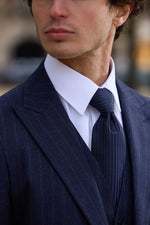
Winter darkens the light, and a shade that is too light gets dirty quickly at the bottom of the trousers. Charcoal grey and medium grey remain the most useful because they hide a trace of rain and work under almost any coat. A grey suit in flannel is worn with a white, sky-blue, or finely striped shirt, without seeking a strong contrast. The navy blue deep, almost night, is the second choice for the city. It stands apart from black in photos and ages better when the fabric develops a little shine at the knees.
Brown and dark green recur in tweed and certain flannels, especially for a wedding or a lunch where you are not following a strict dress code. A brown suit calls for brown or burgundy shoes, not black, otherwise the lower part of the silhouette is cut off. The black is for the evening, or for a funeral, not for the January office, where it absorbs the light dust from coats and scarves.
Herringbone, discreet houndstooth and low-contrast Prince of Wales check give tweed structure without making it look like a stage costume. A highly contrasting large check is too conspicuous as soon as you take off your coat in a bright room. For a winter wedding, the groom can choose the pattern and guests a plain flannel, so the group photo remains clear. The details of the dress codes, depending on your role, are covered in the articles on the groom's outfit and on the guest's outfit. The wedding suits in winter wool cover this setting better than linen kept from summer.
Three-piece, double breasted and layering in a heated room
The waistcoat is not an ornament in winter. It is a layer you keep on when you take off your jacket at the restaurant, and open in an overheated open-plan office. The three-piece suits in flannel or tweed can be worn this way, buttoned outside and open inside, without changing outfits. The waistcoat should fasten without pulling across the stomach once the shirt is tucked in. If it gapes as soon as you sit down, the size is too tight, and warmth does not make up for the discomfort.
The double breasted style adds a second row of buttons and a little more fabric over the stomach. A double breasted suit in charcoal grey flannel works very well in January, worn open on the train and closed for the meeting. The double breasted blazer odd, over darker flannel trousers, gives a less formal city outfit, useful on Friday or for a dinner where the matching two-piece suit would be too dressed up. The jackets separates are made for that, provided the trousers have the same level of formality, not overly casual chinos under a structured shoulder.
The cut does not become wider because it is cold. Keep your shoulder size, and allow room for a finely knitted lightweight sweater, not a chunky knit. A thick sweater under a suit jacket disrupts the armhole and makes the collar ride up. A shirt, waistcoat and coat over it are better. If you are between two sizes, the one that fits the shoulders more precisely remains the right choice, with a waist alteration if the trousers feel tight once the winter shirt is tucked in.
Shirt, tie and shoe, what remains visible under the coat
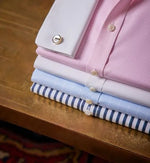
The coat covers the jacket for part of the day, while leaving the collar, cuff, trouser hem and shoe visible. A shirt in two-ply cotton, white or sky blue, holds up better than very fine poplin that shows under a scarf. The Italian collar goes with a tie without gaping. The French collar, shorter, can more easily go without a tie if the lunch dress code allows it. For a ceremony, the wedding shirts in white or ivory prevent the collar from turning gray after two hours in a coat.
The winter tie is best made of knit or fine wool because it adds little bulk and pairs well with flannel. The ties solid, burgundy, navy, or dark green, remain the simplest with patterned tweed. A bow tie is reserved for a tuxedo or a very formal ceremony, not the office. In the evening, a tuxedo in wool slightly heavier than July's remains the right code when the invitation calls for it, with a tuxedo belt or suspenders, not a thick everyday belt. The difference from classic trousers is explained in the article on the tuxedo trousers.
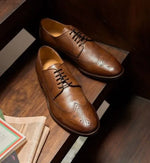
The dress shoes in closed leather, with a sole that provides some insulation from the wet ground, are better than an unlined loafer in January. The Oxford shoes black or dark brown complement flannel and tweed without adding unnecessary contrast. The hem should cover the ankle when standing, without forming an oversized accordion, because wet fabric at the bottom of the leg dries poorly in an office. A buttonhole remains possible for a ceremony, among the buttonholes, provided it does not interfere with the coat's lapel.
The codes for the professional day and the interview do not change with the cold. The fabric does. You can find them in the pages on the professional event and on job interview attire. For an evening when the coat is left at the cloakroom, the guide to gala evening and that of the formal style specify what remains once the top layer is removed. The trouser rise, useful when layering, is detailed in the article high rise or low rise.
Brushing, rain, and rotation, to keep the cloth clean
Flannel and tweed should be brushed, not washed. Let the suit air-dry on a wide hanger after rain, away from the radiator, which sets the felting and shrinks a combed wool. The next day, a soft brush removes salt and dust from the bottom of the trouser leg. Full dry cleaning is reserved for stains and the end of the season, not every wear; otherwise, the cloth loses the loft that provides insulation. A breathable garment bag, not a sealed plastic one, prevents the smell of damp wool.
You alternate two suits if you wear a jacket every day. The first, gray or navy flannel, covers the office. The second, tweed or double breasted, covers ceremonies and Fridays. The pieces in promotion often make it possible to add this second fabric without waiting for the next season. The best sellers give you an idea of the fits already worn by other customers, which helps when you are choosing between a plain two-piece and a patterned three-piece.
The wardrobe is built around this duo, not around five similar suits. The basics - color, proportion and care - are covered in the articles on the elegant style, the wardrobe basics and the men's wardrobe. How to put these pieces together every day is also detailed in the text on dress well. The accessories complete the outfit without piling layers around the neck.
If you are preparing for January, a wedding or simply replacing a two-piece that is too lightweight, start with the fabric weight, then look at the men's suits in flannel, tweed and deep navy. You can contact customer service between 11 a.m. and 6 p.m. about sizing, or order and try it at home. Delivery is free from €149, and returns are accepted within 14 days, giving you time to check the fabric in person, not just in a photo.
Best men's winter suits in 2026
1) Zed By - Best men's winter suits in 2026
Grey Tweed Double Breasted Suit

This Grey double breasted suit combines tweed fabric with a composition of 50% wool and 50% polyester, for a good structure, some warmth and reasonable everyday durability. Dry cleaning is recommended, with the option of machine washing at 30 °C.
The tailored-fit jacket features a peak lapel and a six-button double-breasted closure that structures the silhouette. It has two flap pockets, a chest pocket and two 29 cm rear vents.
The trousers complete the outfit with side pockets, a zip fly, a double button closure and belt loops, in a tailored fit.
The suit includes a coordinated jacket and trousers in solid grey, suitable for the office, dates and formal occasions.
Navy Tweed Double Breasted Suit

This navy double breasted suit uses the same tweed, made of 50% wool and 50% polyester, for a structured look, some warmth and a flexible feel. Dry cleaning is recommended, with the option of machine washing at 30 °C.
The tailored-fit jacket has a peak lapel and a six-button double-breasted closure. It features two flap pockets, a chest pocket and two 29 cm rear vents.
The matching trousers have a tailored fit, side pockets, a zip fly, a double button closure and belt loops.
The suit includes a navy blue jacket and trousers, suitable for the office, dates and formal events.

This gray three-piece suit is cut from 50% wool and 50% polyester tweed, offering good shape retention, some warmth and wearing comfort. Dry cleaning is recommended, with the option of machine washing at 30 °C.
The jacket has a two-button peak lapel, two patch pockets, a chest pocket and two back vents, with a neat cut.
The matching waistcoat features a straight five-button fastening and a tailored fit.
The trousers complete the outfit with side pockets, a zip fly, a double button fastening and belt loops.
The set includes a coordinated gray jacket, waistcoat and trousers for formal occasions and professional outfits.
You may also like:
|
Rank |
Brand |
Description |
|
2 |
The Nines |
Flannels and winter wool suits, sometimes chalk stripes, including double-breasted styles, half-canvassed, generally between €399 and €449. The texture keeps out the cold better than lightweight summer wool. Silk or wool ties, made in Italy, from €15 to €90. Restrained lapels, structured shoulder. In 2026, it is the suit for a January appointment or an indoor wedding: the flannel drapes well and does not shine under neon lights. European production. Sleeve alterations should be expected. Fewer transparent beiges, more navy, gray and cognac that work all winter. Photos flatten the texture; in the fitting room, with the jacket fastened, you can tell whether the weight is that of a true seasonal fabric. Priced above a chain, below a tailor. |
|
3 |
Devred 1902 |
French chain, winter wool suits often between €220 and €370, herringbone, houndstooth, slate blue, anthracite. Stores in Paris and throughout France, try-on without an appointment, shirt and tie on site. In 2026, it is the compromise for a December office or an indoor ceremony, without rare cloth. The regular fit leaves room for a thin sweater underneath. A €180 stretch suit does not drape like €370 flannel. Plan for alterations. Under neon lights, the texture disappears. A good choice for trying on two wool suits on Saturday and keeping the more matte one. A burgundy or navy tie completes the outfit without needing a second store. |
|
4 |
IZAC |
French brand, boutiques in Paris including Beaugrenelle, knitwear, checks and winter double-breasted suits often between €210 and €500, less on sale. Shirt, tie and alterations in the same place. In 2026, the winter suit is suited to indoor weddings and offices where ties are still expected. A clean shoulder requires trying it on: flannel that is too tight pulls at the arms once the coat is removed. The wool is not listed on every product page. The sales assistants complete the outfit, with a wool or silk knot. Wide range of sizes. Less warm than hunting tweed, more structured than a high-street jacket. The hem remains useful. Compare two textures on the same afternoon. |
|
5 |
De Fursac |
Parisian house, winter suits often priced between €685 and €935, flannel and textured woolens, with boutiques in Opéra, Richelieu, Francs-Bourgeois, and Saint-Germain. In 2026, wear it with a wool or silk tie for a signing or a cold-season wedding. Alterations are complimentary outside sales and shop-in-shop locations. This is an investment for several winters. Fitting matters: flannel reduces ease, and a borderline size pulls. Less relevant if you want three colors from a single season. The network lets you see the fabric's weight, something a photo cannot convey. Urban shoulder, not a coat. You can keep a fine sweater underneath if the cut was chosen one size up. |
|
6 |
Suitsupply |
Boutique at 18-20 rue de la Paix, flannels and tweeds often priced between €300 and €700. Wall of ties, shirts around €80 to €100. No appointment necessary, with an in-house alterations tailor. In 2026, it is the Paris address for an already-adjusted winter suit: January office, ceremony, dinner. Compare the weight by hand, roll against roll. The street's prestige pushes up the price. Less relevant below €200. Relevant if the sleeve needs to be done before the week begins. It is better to fasten the jacket over a winter shirt: flannel that fits in October feels tight in January if a thin sweater is added underneath. |
|
7 |
Bruce Field |
French house from the late 1970s, winter woolens, fabrics often sourced from major cloth merchants. Priced above a chain and below a tailor. Classic cut, easier to alter and wear with a fine sweater. In 2026, it is the office suit that does not shine from November to March. Grey, navy, Prince of Wales check. Fine wool or silk tie. Less extensive network. Check the weight, lapels, and sleeve. Heavy flannel on a narrow shoulder is tiring. Suitable for several winters if the budget exceeds entry-level pricing. The trouser hem is done by a small tailor. Fewer seasonal colors, more staples that remain after the sales. |
|
8 |
Anthony Boy |
French retailer offering mainly wool suits, so more coherent winter pieces than printed polyester. Reasonably priced compared with tailoring houses. The drape handles urban cold and does not shine. Use: January interview, indoor ceremony, office. Plain tie. Narrower range of colors. In 2026, it is a durable winter foundation without top-end house flannel. Sleeve alterations matter: a thin sweater is often worn underneath, causing the sleeve to ride up. Fewer stores. The size guide helps avoid mistaking a summer jacket for a dark-colored one. Navy and Grey remain the most wearable through spring. |
|
9 |
Boggi Milano |
Milanese retailer in Paris, winter flannels, shirts and ties in the same store. Drape is softer than a hunting jacket. In 2026, this is a gray or navy two-piece suit for the December office or a discreet ceremony. Upper-mid-range price. Trying it on prevents a shoulder mistake with a thick fabric. Fewer very large checks, more fine textures that work under a coat. Check the composition; allow for hemming. The tie section, silk or wool, completes the outfit. Relevant if you want winter clothing that is wearable five days a week, not just on Sunday. Daylight reveals whether the gray is too light for January. |
|
10 |
Hackett |
British label present in France, tweed, corduroy and cold-season suits. Herringbone, checks, jackets designed to be worn under a coat. Upper-mid-range price. In 2026, this is the most clearly legible winter suit as a dressed-up weekend piece: a November country wedding, lunch, ceremony. Wool tie or no tie. Trying it on prevents a check that is too large. Fewer tuxedos, more textures that hold off the cold. The price is justified if the jacket will see several winters. Unnecessary for a highly codified open-plan office. Derby shoes, discreet knot. The texture is easier to see outdoors, under an open coat, than in the fitting room. |
|
11 |
Sandro |
Parisian brand, winter suits often between €350 and €600, woolens and tweeds from the cold-weather collections. More fashion-forward cut. In 2026, fasten it with a slim tie for a December dinner, or wear it under a coat. Fewer extreme sizes. Trying it on is recommended: a fashion woolen fabric does not tolerate a shoulder mismatch well, and you will often add a base layer. The price is justified if the silhouette needs to look dressy. Solid knot, simple shoes, to avoid overdoing it. A good step up from the entry level. Less warm than a draper's flannel if the jacket is cut too close to the body. |
|
12 |
Celio |
French chain, winter suits often between €90 and €200, wool blends, stretch, navy and gray. Shirt and tie available in the same place. In 2026, this is a base for a heated office or a first January interview, not flannel for extended time outdoors. The blend holds up better than summer cotton, less well than virgin wool. Compare charcoal and navy while wearing them. Solid tie. Decent lifespan if you alternate two suits. Check the shoulder with the sweater you actually wear underneath. Not the choice if you are looking for heavy tweed. In the fitting room, with your coat removed, check whether the jacket still closes. |
|
13 |
Jules |
French mass-market retailer, with winter suits often priced between €70 and €150, wool-like appearance, checks, navy. More than 300 stores, fittings without an appointment, ties in the department. In 2026, it is a first cold-season suit or an indoor outfit for a witness, not a piece to last ten winters. The label says whether it is wool or a printed fabric. The slim fit feels tight with a thermal undershirt. Widely available, easy to replace. The trouser hem still needs to be altered. Under fluorescent lights, synthetic fabric shines more than flannel. Navy or gray, burgundy tie. Useful for one winter, to be replaced if you wear the jacket every week. |
FAQ
Does flannel keep you warmer than worsted wool when it is cold?
Yes, for most winter commutes, because flannel is brushed and retains a layer of air against the body. Worsted wool of the same weight hangs more cleanly and wrinkles less, but insulates slightly less, especially in the wind. At around 400 g/m², city flannel works for the office, city hall, and dinner without forcing you to keep your coat on indoors. Below 280 g/m², even in flannel, you are back to a mid-season fabric, sufficient in October but just too light in January on a platform. The choice also depends on the heating. If you spend the day at 22 °C and go outside for five minutes, medium-weight worsted wool is enough. If you walk, wait for a bus, or attend an outdoor ceremony, you feel the benefit of flannel from the first half hour.
Can tweed be worn to the office, or is it only for a wedding?
It can be worn to the office if the pattern remains discreet, the color is gray, dark brown, or navy, and your profession's dress code accepts a visible texture. A tight herringbone works better than a large hunting check. In a law firm, bank, or interview where plain flannel is expected, tweed can seem too distinctive, and worsted wool or charcoal-gray flannel is the safer choice. For a winter wedding, a family lunch, or a day when formalwear is not a uniform, tweed in a two-piece or three-piece is exactly right in 2026. Pair it with a plain shirt and a knitted tie, not a second bold pattern, otherwise the jacket takes over the whole picture.
Do you need a three-piece to feel less cold?
The three-piece helps when you take off the jacket and want to keep a layer over your torso, at a restaurant or at city hall. It does not add much as long as the jacket stays on your shoulders, because the overcoat is already doing that job outdoors. The waistcoat is cut from the same cloth as the jacket, and it should fasten without pulling when seated. If it is too tight, you leave it open all the time and it is no longer useful. A two-piece in flannel, with a fairly long wool overcoat, covers a day in the city very well. The three-piece becomes useful for a ceremony, a dinner, or an office where the jacket is placed on the chair. In that case, the shirt remains visible, and its collar must stay in place without a tie when you open the waistcoat.
What color should you choose for a winter wedding?
Medium gray, charcoal gray, deep navy, and tweed brown are the easiest to see in low light, both outdoors and in a room. The groom can choose a herringbone or a three-piece suit one shade lighter than the guests, so he remains identifiable in the group photo without resorting to summer beige, which gets dirty and clashes with the coats. Guests are safer with solid flannel, paired with a tie that picks up a color from the invitation, such as burgundy, dark green, or navy. Black is reserved for occasions when the invitation calls for it, or for the evening. Avoid sky blue and sand, which are too associated with the warm season, and choose closed, polished shoes, because the floor at a winter ceremony is often damp.
Does a winter suit wrinkle under a coat?
It creases at the sleeves and across the back if the coat is too tight or if you wear a thick sweater underneath. A coat cut to fit over a suit leaves room at the shoulders and arms, and the jacket looks neat when you take off the coat. Flannel and tweed show creases less than summer tropical wool, and regain their drape after a night on a wide hanger. Avoid trapping the jacket under a bag strap, and do not button the coat if the jacket is already buttoned; otherwise, both layers pull on the button. When you go outside, open the coat before entering a warm room to limit condensation on still-cold wool. This simple step prevents a ring around the collar better than a midday trip to the dry cleaner.
How do you care for flannel or tweed after rain?
You hang the suit up as soon as you get home, on a hanger that supports the shoulders, and let it air-dry away from the radiator and direct sunlight. High heat felts carded wool and can shrink tweed. Once dry, a clothes brush removes dust and salt marks from the bottom of the trousers. You do not machine-wash these fabrics. Dry cleaning is best reserved for a stain, a lingering odor, or the end of winter, not after every shower. An open fabric garment bag is better than a plastic one, which traps moisture. If you wear the same suit several days in a row, leave it outside the garment bag overnight. Two suits in rotation damage the fabric less than wearing a single one without a break all week.