How should you dress for a job interview?
Sep 13, 2026Know how to dress for a job interview is not a matter of vanity. It is a matter of perception. Before your answers, the recruiter sees a silhouette, a shirt, and shoes. According to a Robert Half survey cited in 2025, 65% of French recruiters acknowledge that clothing affects their perception of the candidate. A CareerBuilder study adds that more than half form a first impression in less than five minutes. You do not need a runway wardrobe. You need a neat outfit, one step above the everyday standard for the role, and nothing distracting. Discover how to dress for a job interview in 2026.
Before buying, you need a framework. How to dress well as a man covers the basics: a tucked-in shirt, a properly adjusted hem, and consistent colors. The basics of an elegant men’s wardrobe then reduce your wardrobe to what you actually wear. To raise the level without changing everything, how to build a chic men’s wardrobe brings together the suit, trousers, and jacket. The complete guide to formal men’s style is useful whenever the meeting calls for it. The rest comes down to the essential rules of elegant men’s style: proportion, restraint, and fabric that does not shine.
What is silently judged when you enter the room

Your outfit communicates order. A clean collar, pressed trousers, polished leather: the message is “I take this meeting seriously.” A wrinkled shirt, worn sneakers, or an oversized jacket make the message unclear. The substance of your résumé cannot erase this first impression.
Blue often conveys seriousness and stability. Orange and overly bright shades work against you in CareerBuilder surveys. Stick to navy, gray, white, and light blue. A tiny pattern is fine. A vacation print is not.
Three questions to ask yourself before choosing:
- What is the company’s usual dress code?
- Is the meeting by video, in an open-plan office, or with senior management?
- Is it 18°C or 36°C outside?
It is better to arrive slightly overdressed than visibly too casual. You can always open the collar afterward, but you can never resew a first impression.
Finance, consulting, tech: the dial is adjusted to the sector
Banking, insurance, legal, large firm: two-piece suit, light shirt, understated tie, black oxfords. Little room for interpretation. Black can seem harsh. Navy and charcoal gray inspire more confidence.
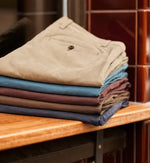
Retail, sales, support roles: blazer + dress trousers + shirt. The tie depends on the position's level in the hierarchy. Overly light chinos and a polo shirt send the opposite signal.
Tech, startup, agency: polished business casual. Long-sleeved shirt, neat trousers, blazer optional. A complete three-piece suit can create unnecessary distance. So can faded jeans. Very dark raw denim, exceptionally, if the culture genuinely allows it. When in doubt, shirt and blazer.
Creative: a touch of personality, not a costume. A striped shirt very fine beneath a plain blazer is safer than a large pattern.
Public service and institutions: maximum restraint. Classic colors, few accessories, closed-toe shoes.
|
Sector |
Expected level |
Men's basics |
Leave it in the closet |
|
Banking, finance, law |
Formal |
Navy or gray suit, tie, black leather |
Bright colors, sneakers |
|
Consulting, large corporation |
Formal to smart |
Suit or blazer + dress trousers |
Polo shirt, light jeans |
|
Sales, retail |
Approachable and polished |
Shirt, blazer, neat trousers |
Sportwear |
|
Tech, startup |
Business casual |
Shirt, straight-leg trousers, blazer optional |
Overly ceremonial suit, shorts |
|
Creative |
Controlled |
Blazer, clean shirt, one touch of style |
Eccentricity, logos |
|
Public sector, nonprofit |
Conservative |
Navy / gray, few accessories |
Anything eye-catching |
The navy, white, and leather formula
If you remember only one combination: a navy blazer or suit, a white or sky-blue shirt, matching or gray trousers, and leather shoes. This formula works across almost every sector.
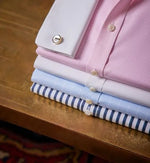
A blue shirt softens a dark suit and also works without a tie. Browse the men's blue shirts for a collar that stays in place through an hour-long interview without collapsing. The Italian collar opens up the face slightly, which is useful without a tie. The Italian-collar shirts suit this setting. The French collar, more classic, works better with a tie. A barrel collar, rarer, is reserved for very formal settings: see the barrel-collar shirts only if the position calls for it.
Poplin cotton remains the office fabric. It irons well, breathes, and does not shine under fluorescent lights. The point is explained in detail in the best cotton shirts. Long sleeves remain the norm, even in June. A useful guide: long-sleeved shirts.
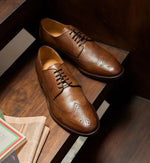
On your feet, black Oxfords remain the most formal signal. The collection men’s Oxford shoes meets this need for interviews, committees, and headquarters. Belt in the same leather. Socks matching the trousers.
Video calls, heatwaves, second interviews: adapt without letting standards slip
On video calls, the frame often cuts off at the chest. Impeccable shirt, collar closed or open by one button, jacket if the position is formal. Check the background and lighting. A white shirt that is too thin becomes transparent when backlit. Sit as you would in the room: the fabric pulls differently.
In very hot weather, change the fabric, not the level of formality. Tropical-weight wool, lightweight cotton, slightly lighter colors. Hellowork pointed this out during the June 2026 heatwave: arriving sweaty is just as unhelpful as a beachwear look. No shorts, no flip-flops, no clingy synthetic shirt. A breathable fabric and discreet deodorant do more than a new suit that is too hot.
Second interview or meeting with someone two levels above you: step it up if the first interview was already smart casual. An additional jacket costs little and conveys “I understand the hierarchy of the setting.”
If you are looking for a shirt that can handle everyday professional wear after you get hired, the options made in France often prioritize collar construction and durability.
Mistakes that cost you dearly
Overly strong perfume in an enclosed room. Neglected nails. An unevenly trimmed beard. A gym bag instead of a discreet portfolio. A phone sticking out of your breast pocket. White tennis socks. A suit that is too small and pulls at the buttons as soon as you explain a project.
Other pitfalls:
- Arriving in weekend clothes “because the company is cool”
- Wearing a tuxedo or bow tie, which is inappropriate here
- Wearing too many accessories (oversized watch, chain bracelet, lapel pin)
- Copying an overly stylized social media look
- Discovering in the morning that a button is missing
Prepare your outfit the day before. Sit down, raise one arm, walk around. Anything that bothers you will bother you in front of the panel.
The day before and in the morning, like a professional checklist
The day before:
- Iron your shirt and trousers
- Polish your shoes
- Check the collar, cuffs, and hems
- Pack a spare shirt in your bag
- Choose a solid-color tie if the industry requires it
In the morning:
- Shower, teeth, breath
- Anti-pilling fabric on the jacket
- Less product in your hair
- Arrive ten minutes early, jacket buttoned when entering
Keep the same codes if the meeting turns into lunch. The tie can be loosened by one notch at the table, but it should not disappear into the cloakroom upon arrival.
When the foundation is still missing, start with a well-cut light-colored shirt and a pair of dress shoes. Choose a blue shirt if you want the most useful piece, then a pair of Oxford shoes to complete the look. Free delivery on orders over €200, returns within 14 days.
Discover how to dress for a job interview in 2026 - Zed By

This shirt is made from 100% cotton, offering optimal comfort and a soft texture to the touch. Easy to care for, it can be machine-washed at 30° while preserving its quality and color.
It features a tailored fit that elegantly emphasizes the silhouette, as well as a mandarin collar that gives it a sophisticated and modern touch. The button closure ensures convenient dressing while maintaining a polished style.
White in color, this shirt is versatile and pairs perfectly with both formal and casual outfits for a classic and refined look.

This shirt is made from 80% cotton and 20% polyester, combining the softness and lightness of cotton with the durability and ease of care of polyester. It can be machine-washed at 30° to preserve its quality and color.
It features a tailored fit that enhances the silhouette, as well as a Neapolitan collar that adds an elegant and refined touch, ideal for a chic and modern look. The button closure allows for easy dressing while maintaining a polished style.
Blue in color, this shirt lends itself to many combinations, whether for formal or casual outfits, offering an elegant and versatile look.
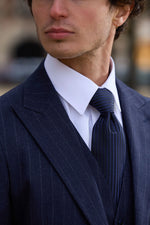
Navy Pinstriped Flannel Double Breasted Suit

This navy pinstriped flannel Double Breasted Suit combines classic elegance with modernity thanks to its refined pattern and tailored fit. Made from a fabric composed of 50% wool and 50% polyester, offering an excellent balance of comfort, warmth, and structure. Dry cleaning is recommended, with the option of machine washing at 30°C on a delicate cycle.
The jacket has a tailored fit with a 6-button double-breasted peak lapels, creating a structured and sophisticated silhouette. It features two patch pockets, andone chest pocket as well as two 29 cm back vents, ensuring both elegance and freedom of movement.
The matching trousers complete the ensemble with side pockets, a zip fly, a double-button fastening and belt loops, ensuring a comfortable fit and an impeccable drape.
The set includes a a perfectly coordinated jacket and trousers, ideal for professional appointments, ceremonies, or any occasion requiring an elegant and distinguished outfit.
Navy Tweed Double Breasted Suit

This navy tweed double-breasted suit is distinguished by its timeless style and confident elegance. Made from a fabric composed of 50% wool and 50% polyester, it offers excellent shape retention, optimal comfort, and pleasant warmth, ideal for cooler seasons. Recommended care is dry cleaning, with machine washing possible at 30°C on a delicate cycle.
The jacket has a tailored fit with a 6-button double-breasted peak lapels, creating an elegant, structured silhouette. It features two flap pockets, andone chest pocket as well as two 29 cm back vents, combining practicality with refined finishing.
The matching trousers complete the set perfectly with their side pockets, its zip fly, its double-button fastening and its belt loops, ensuring comfortable support and an impeccable drape.
The set includes a matching jacket and trousers, perfect for formal events, professional appointments, or ceremonies where elegance is called for.
FAQ
Do you absolutely need a suit for a job interview?
Not always. In banking, consulting firms, or the headquarters of a large corporation, yes, the two-piece suit remains the standard. At a startup, in tech, or at certain agencies, a smart shirt, straight-leg trousers, and possibly a jacket are enough. The safest rule: dress one level above the everyday standard for the role. Look at team photos, LinkedIn profiles, and the reception area. If everyone is wearing T-shirts, a shirt and a lightweight jacket will avoid going too far in the opposite direction. If everyone is wearing suits, chinos will make you stand out. It is better to ask the assistant or recruiter. One sentence is enough. Guessing costs more than a thirty-second call.
Which color should you choose to reassure a recruiter?
Navy blue comes out on top in most recruiter feedback. It conveys calm and reliability. Charcoal gray comes next, with a more contemporary feel. White and sky blue work well for a shirt. All-black can make your face look harsher under fluorescent lighting. Very warm colors, with orange ranking first in the CareerBuilder study, create a less professional impression. A burgundy or navy tie remains an acceptable accent. Avoid combining a pattern, a bright color, and a bulky accessory. An interview outfit should fade into the background behind your answers. If people remember your jacket more than your experience, the color has spoken too loudly.
How to dress for a video interview?
The top half matters more, but the bottom half isn’t optional. An ironed shirt, a collar that holds its shape, and a jacket if the position is formal. Test the camera: some white shirts become transparent, and some checks create a moiré effect on screen. Sit up straight, framed from mid-chest upward. Dress trousers prevent an unpleasant surprise if you need to stand up. Face the lighting, use a simple background, and choose a discreet headset rather than sports earbuds. Video interviews don’t make a hoodie acceptable “because it won’t be seen.” People can see the collar, the lighting, and your posture. Prepare as you would for an in-person interview. The effort shows on screen too.
Can you take off your tie in some industries?
Yes, as soon as the company dress code clearly allows it. Tech, digital, certain small and medium-sized businesses, and supervised field roles. When in doubt, put one on and remove it if your interviewer is open and wearing an open collar. A tie that’s too wide, too shiny, or has cartoon patterns works against you more than it helps. Navy, gray, or discreet burgundy. The tip of the tie should reach your belt, not sit too high. Without a tie, the collar should remain neat, open by only one button. An oversized shirt without a tie looks more like an afternoon outfit than an interview outfit.
What should you wear when it’s very hot?
Keep the structure, lighten the fabric. Cotton, lightweight wool, and slightly lighter colors. A long-sleeved shirt that you can roll up afterward, not during the presentation. Carry your jacket on your arm outside, and wear it over your shoulders in the office. Hydrate beforehand, not by drinking a large glass of water the second you’re called in. Bring a clean handkerchief for your forehead. Avoid overly wrinkled linen if the position is very formal. Above all, avoid shorts and sandals. Heat explains a drop of sweat, not a patio outfit. Arrive a little early so you can cool down in the lobby.
How much should you invest in an interview outfit?
Enough to hold its shape and keep the fabric from shining, but not enough for a formal suit. A quality shirt, well-fitting trousers, and resoleable shoes do more than an overly tight, low-end outfit. You’ll reuse these pieces at the office once you’re hired. It’s a work tool, not a one-day costume. Check the return policy, sizes, and the condition of the buttons. A trip to the dry cleaner the day before costs little. A rushed purchase that morning costs you a first impression. Prioritize what’s visible up close: collar, cuffs, shoes. The rest can wait until your first paycheck.