Complete Guide to Formal Men’s Style
Sep 09, 2026The complete guide to formal men’s style starts with a simple idea. The men’s formal style is not a costume. It is a suit that falls straight, a crisp shirt, and clean dress shoes. Office, wedding, evening: the codes change. The foundation remains the same. This guide will help you read these codes, avoid obvious mistakes, and put together an outfit that lasts all day. Discover our complete guide to formal men’s style in 2026.
The dress code changes according to the occasion, not according to your mood in the morning. For a wedding as a guest who is already married, how to dress for a wedding when you’re married helps you avoid overshadowing the newlyweds while still looking polished. A job interview calls for more formality than trendiness: a simple suit, a clean shirt, nothing that speaks louder than you do. At a professional event, the jacket carries you through the day; in the evening, how to dress for a gala evening determines the choice between a dark suit and a tuxedo. Between the two, dressing elegantly without overdoing it remains the safest rule: good proportions, few accessories, matte fabric.
Three levels, not just one “dressy” category

Everyone says “dressy attire.” That isn’t precise enough.
Business formal. Two-piece suit, solid shirt, optional tie, smooth leather shoes. This is the demanding office, the interview, the client meeting.
Cocktail / semi-formal. More relaxed suit, sometimes without a tie; loafers are possible. Daytime wedding, dinner, gallery opening.
Black tie. Tuxedo, structured white shirt, bow tie, patent or very dark dress shoes. Gala, wedding evening, awards ceremony.
The market confirms it. Men’s formal wear was worth approximately $21.2 billion in 2025, representing 48.3% of the global formalwear market, according to Dataintelo, which projects the total market to reach $72.6 billion by 2034, growing at 5.8% annually. In Europe, the men's suit market is estimated at $9.01 billion in 2025, with a projection of $14.17 billion in 2034 (5.1% annually), according to Deep Market Insights. Formal suits remain the leading segment, at around $4.13 billion in 2025. In other words, the suit has not disappeared. It has simply become more defined.
A men's suit covers the first two levels. A tuxedo takes the third. Mixing the two on a black-tie evening is already a mistake.
The foundation that determines everything else
Three pieces account for 90% of the look: jacket, shirt, shoe.
The jacket of a two-piece or three-piece suit should end at the shoulder bone. The shirt collar extends about one centimeter above it. The sleeve reveals a little wrist. The suit trousers brushes the shoe, with a single break.
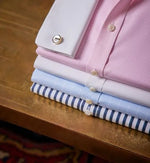
The men's shirt White remains the safest choice. Sky blue works in the office when the industry does not require white. For an interview, the interview shirt is worn tucked in, with the collar fastened and matte fabric.
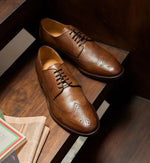
The suit shoes anchor the outfit. Cap-toe Oxford or sleek derby for strict formalwear. A loafer handles cocktails, not black tie. The global men's formal shoe market, estimated at $10.9 billion in 2024, is expected to reach $17.5 billion by 2033 according to IMARC, growing at 5.18% annually. Europe remains a major market. A worn-out shoe cancels out a new suit.
The suit socks follow the trousers, not the shoes. Navy under navy. Grey under grey. Sporty white breaks the line of the leg as soon as you sit down.
To establish this foundation without buying too quickly, the first men's suit and common mistakes when buying avoid overly broad shoulders and excessively long hems.
Accessories: few items, plenty of impact
A tie is not mandatory everywhere. It still is in finance, law, and highly formal daytime ceremonies. Elsewhere, an impeccable shirt and a well-cut jacket are enough.
The double breasted suit is often worn buttoned up. It broadens the chest. If you wear a tie, keep it understated.
In the evening, the bow tie replaces the tie. A bib-front shirt or a wing-collar shirt frames the bow tie. The wing collar, when to choose it , is mainly reserved for a tuxedo. A Mao collar lowers the level. It works for a cocktail party, not a gala.
Belt and shoes: the same leather family. Black with black. Brown with brown. With a tuxedo, the classic belt disappears. A tuxedo belt or a waistcoat fastens the waist. The tuxedo trousers often has a braid and few visible belt loops.
The essential pieces to wear with a suit fit into a short list: two belts, two pairs of shoes, three shirts, dark socks. Nothing more to start with.
Office, wedding, evening: the same man, three interpretations
At the office, navy and grey come out on top. A brown suit works in autumn, with a light shirt. The 2026 suit guide calls for less restrictive cuts. You sit for eight hours. Extreme slim fits are tiring.
Daytime wedding: more color is possible, never jeans. The wedding suits and the white formal shirt photograph better than flat black in the sunlight. What shirt should you wear to a wedding depends on the role. As a guest, remain more understated than the groom.
Evening wedding or gala: gala suits or black tuxedo. A summer shirt too lightweight has no place under a satin lapel.
The three-piece suit helps when you take off the jacket. The waistcoat keeps the shirt in place. Useful for ceremonies, and also in an air-conditioned open-plan office.
|
Level |
Jacket |
Shirt |
Neck |
Foot |
Accessory |
|
Formal office |
Two-piece suit |
White or sky blue |
French or Italian |
Smooth leather |
Tie according to your profession |
|
Cocktail |
Suit or double breasted suit |
Light solid |
One button may be left open |
Derby or loafer |
Discreet pocket square |
|
Black tie |
Tuxedo |
Structured white |
Wing collar or bib front |
Patent leather / very dark |
Bow tie, no dress belt |
|
Daytime wedding |
Navy, grey, taupe |
White, ivory |
Classic |
Matte leather |
Subtle tie |
Cut and budget, in that order
A beautiful fabric with a poor cut looks cheaper than a good fit. The shoulders can hardly be altered. The hem can. The trouser waist often can. That is the whole point of bespoke, made-to-measure, or ready-to-wear.
How much does a good suit cost depends on how it is used. A suit worn twenty times a year better justifies the investment than a piece worn for two evenings. Alternate two suits. The fabric recovers.
To build a wardrobe around the suit, start with navy, add grey, and only then a three-piece suit or a tuxedo. To standalone suit trousers extends the jacket you already bought. A pair of tuxedo trousers does not replace a dress trouser.
If you are hesitating between two sizes, choose the one that fits across the shoulders. The rest can be adjusted. The shoulders cannot.
A short rotation you can use right away
Five items cover almost the entire formal year:
- Navy two-piece suit
- Grey suit
- Three solid shirts
- One black pair, one brown pair
- Tuxedo if your schedule calls for it
Only then, a double breasted suit, a three-piece suit, an ivory shirt. Too many ill-fitting pieces are worth less than three well-chosen outfits.
Try on the whole outfit, not just the individual piece. Buttoned jacket, tucked-in shirt, dress shoe. If the silhouette is understated, you have a truly formal style. Start with a well-cut business suit and build the rest around it.
Discover our complete guide to men's formal style in 2026 - Zed By

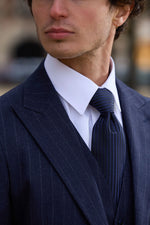
This navy blue three-piece suit combines timeless elegance and comfort thanks to a composition in 50% wool and 50% polyester, offering good shape retention, wrinkle resistance, and lasting comfort. Recommended care is dry cleaning, with the option of machine washing at 30°C on a delicate cycle.
The jacket features a structured cut with two-button notched lapels, adding a classic and refined look. It features three flap pockets, and chest pocket as well as two 29 cm rear vents, ensuring comfort and ease of movement while maintaining an elegant silhouette.
The matching waistcoat features a slim fit with a straight five-button fastening, enhancing the sophistication of the ensemble and adding an extra touch of structure.
The trousers complete the outfit harmoniously with side pockets, a zip fly, a double-breasted button fastening as well as belt loops, ensuring a comfortable and precise fit.
The set includes a jacket, a waistcoat, and perfectly coordinated trousers, ideal for formal, professional, or elegant occasions.

This grey three-piece Suit combines contemporary elegance and comfort thanks to a balanced composition of 68% polyester, 30% viscose, and 3% elastane, offering good shape retention, slight stretch, and optimal everyday comfort. Recommended care is dry cleaning, with the option of machine washing at 30°C on a delicate cycle.
The jacket features a structured cut with two-button notched lapels, creating a classic and refined silhouette. It features two patch pockets, and chest pocket as well as two 29 cm rear vents, ensuring ease and comfort of movement.
The matching waistcoat features a straight five-button fastening and slim fit, enhancing the elegance of the ensemble while adding an extra touch of sophistication.
The trousers complete the outfit harmoniously with side pockets, a zip fly, a double-breasted button fastening and belt loops, ensuring a practical and comfortable fit.
The set includes a jacket, a waistcoat, and perfectly coordinated trousers, ideal for formal occasions, events, and elegant professional outfits.

This navy blue three-piece Suit combines timeless elegance and modern comfort thanks to its composition of 67% polyester, 29% viscose, and 4% elastane, offering good shape retention, wrinkle resistance, and slight stretch for enhanced wearing comfort. Recommended care is dry cleaning, with the option of machine washing at 30°C on a delicate cycle.
The jacket features a structured cut with two-button notched lapels, adding a classic and refined look. It features two flap pockets, and chest pocket as well as two 29 cm rear vents, ensuring comfort and ease of movement while maintaining an elegant silhouette.
The matching waistcoat features a slim fit with a straight five-button fastening, enhancing the sophistication of the ensemble and adding an extra touch of structure.
The trousers complete the outfit harmoniously with side pockets, a zip fly, a double-breasted button fastening as well as belt loops, ensuring a comfortable and precise fit.
The set includes a jacket, a waistcoat, and perfectly coordinated trousers, ideal for formal occasions, events, and elegant everyday outfits.
Discover also:
FAQ
What is the difference between a suit and a tuxedo?
The suit remains the daytime and office garment. The lapels are made of the same fabric as the jacket, the trousers have no satin stripe, a belt is acceptable, and a tie is optional. It is worn in navy, gray, beige, and sometimes brown. The tuxedo takes things up a notch. It has satin or silk lapels, trousers often with a satin stripe, no everyday belt, and a bow tie rather than a necktie. The shirt becomes more structured. Wear it in the evening, for a gala, or for a black-tie wedding. Wearing a black suit that is “almost a tuxedo” to an evening event with a strict dress code creates a visual gap: neither formal enough for town nor ceremonial enough. If the invitation says black tie, choose the tuxedo. If it says business attire or cocktail, a two-piece suit is enough, provided the fabric holds its shape and the shoes are leather, not sporty.
Can you wear a suit without a tie and still look formal?
Yes, in many contexts in 2026. The collar must then stay neat, with only the top button undone, never two. A well-cut solid shirt replaces the tie. In finance, law, and religious ceremonies, the tie often returns. In marketing, tech, and at cocktails, going without one works if the jacket fits properly and the trousers are hemmed. A collar that is too open with a jacket that is too loose creates a weekend look. Check yourself standing and sitting. If the collar collapses, put the tie back on or change your shirt. The idea is not to “undress” the suit. It is to remove one accessory while keeping the structure. The belt, shoes, and dark socks remain in place. Without them, going tieless immediately slips into smart casual.
Which shoes should you choose for a formal outfit?
The plain black Oxford remains the most formal. The plain derby comes close and is easier to put on. The loafer works for cocktails and some more relaxed offices. Patent leather is reserved for tuxedos and very formal evening events. The color rule is simple: black with a dark suit, brown with light navy, gray, beige, or brown. Thin soles, well-maintained leather, no rugged hiking soles. Replace worn laces. A cracked shoe is as noticeable as a wrinkled shirt. Alternate two pairs during the week to let the leather dry. Socks should be high enough to prevent skin from showing when seated. If you can buy only one pair to start, choose plain black. It works for the office, a funeral, and dinner. Brown comes next, as soon as the suit is no longer black.
How can you tell if the suit is the right size?
Look at the shoulders first. The seam ends exactly at the shoulder bone. Too wide, and the jacket hangs loosely. Too narrow, and it pulls across the back as soon as you raise an arm. Fasten the waist button. The fabric should not form an X. At the cuffs, one centimeter of shirt should show. Judge the trousers without a belt first: they stay up, two fingers fit at the waist, and the hem touches the shoe. Sit down. The fly should not open. The hem should not ride up to reveal a white sock. From the side, the leg line should remain continuous. If only the hem and a little at the waist are a problem, an alteration is enough. If the shoulder is off, change sizes. That is the part a tailor can correct least effectively. Always try them on with the planned shirt and shoes, not sneakers.
What should you wear to a wedding depending on the time and your role?
For daytime, a navy or gray suit, a white or ivory shirt, and matte dress shoes. The guest should be more understated than the groom. Avoid an all-white outfit and a tuxedo at 3 p.m. outdoors. In the evening, the formality rises. A black or midnight-blue tuxedo if the invitation specifies it; otherwise, a very neat dark suit. The best man and groom can opt for a three-piece suit. A discreet boutonniere is enough. The shirt should remain light-colored, with a collar suited to the tie or bow tie. In summer, reduce the fabric weight, not the cut. Fabric that is too thin under a dark jacket shows every mark. In winter, flannel or a denser blend holds up better in nighttime photos. Read the invitation again. “Business attire,” “smart,” and “black tie” do not mean the same thing. When in doubt, a navy two-piece suit, white shirt, and black Oxford shoes. You will never be the most overdressed or the least polished.
How many suits do you need for a useful formal wardrobe?
Two well-cut suits already do the job. A navy one for a polished look. A gray one for variety and to mix and match the jacket. Add three solid shirts, two belts, and two pairs of dress shoes. That covers the office, interviews, daytime weddings, and dinner. The third purchase depends on your schedule. Lots of evening ceremonies: tuxedo. Lots of public speaking: three-piece suit. Difficult build: a tailoring budget is better than a fourth mediocre suit. Wear each piece for at least a full day before buying another. You will then see where it pulls, where it wrinkles, and where the hem falls short. Rotating two suits lets the fabric rest. Wearing one suit four days in a row leaves marks at the knees and makes it age faster. Start with a small wardrobe, get the fit right, and add pieces only when your calendar requires them.
Discover our complete guide to men's formal style in 2026 - Zed By