Best suits with ties in 2026
Oct 05, 2026The best suits with tie in 2026 are recognized by a simple principle. The jacket and trousers come from the same fabric, the shirt supports the collar, and the tie frames the face in the right place. This combination remains the clearest choice whenever an interview, ceremony, or dinner calls for recognizable formalwear. The open collar has become more common at the office, but it does not replace the knot when the photograph, invitation, or role calls for one. Discover the best suits with tie in 2026.
What the invitation changes before color

Before buying, read the exact wording. Business attire, cocktail, ceremony, formal evening event, and black tie do not call for the same garment. A suit with tie covers the first three, and often the fourth as well if the venue is not highly formal. Black tie requires a tuxedo, a bow tie, and satin lapels. Confusing the two is noticeable as soon as you arrive, because the other guests are already following the same dress code.
The gala evening guide separates these levels. If the invitation says black tie optional, charcoal with a dark tie works, while a tuxedo remains the more appropriate choice. If the invitation says nothing, navy or gray with a white shirt and solid-color tie remains the most versatile choice. The formal style guide comes back to this reading, rather than to an isolated color.
|
Wording on the invitation |
Properly fitting garment |
Tie or bow tie |
Shoes |
|
Business attire, office |
Navy or gray two-piece suit |
Solid-color or small-patterned tie |
Black or polished brown leather |
|
Interview, appointment |
Single-breasted suit, light-colored shirt |
Subdued tie, burgundy or navy |
Black, well polished |
|
Daytime wedding |
Two-piece or three-piece |
Tie clearly visible from a distance, matching pocket square |
Leather, matching the belt |
|
Formal evening event without further specification |
Charcoal or very dark navy |
Dark tie, matte silk |
Black |
|
Black tie |
Tuxedo, satin lapels, braid |
Black bow tie |
Black leather, often patent |
|
Black tie optional |
Tuxedo preferred, charcoal acceptable |
Bow tie, or very dark tie |
Black |
Tie width, knot, and length
The width of the tie follows the lapel and collar. Around 7 to 8 cm, it works with a classic collar and a standard jacket. Around 6 cm, it suits a more fitted jacket and a slender face. Below 5 cm, the knot becomes a detail, and it only fits the formal register if the rest of the outfit is already very strict.
The simple knot, known as the four-in-hand, creates a slightly asymmetrical triangle. It suits daytime and most collars. The half Windsor fills an open collar better and suits a long neck. The full Windsor requires a widely spread collar; otherwise, it feels constricting. In all three cases, the tip reaches the belt buckle, not the middle of the stomach or the trousers.
The small dimple beneath the knot shows that the silk has been tightened in the right direction. Matte silk remains the safest material for daytime. Very shiny silk is reserved for evening. Fine wool and knit ties go with tweed, not with a smooth formal suit. The men's ties from our selection is often worn with a pocket square in the same pattern, which balances the contrast without adding a third color.
A patterned tie is worn with a plain shirt. A fine-striped shirt accepts a solid or micro-patterned tie. Two patterns of the same size clash. If you wear a tie clip, place it horizontally between the third and fourth buttons, without extending beyond the blade. You will find it among the suit accessories.
Two-piece, three-piece and double breasted, three constructions
The straight two-button jacket remains the simplest base with a tie because the open V shows the knot. Fasten the top button when standing, and open it as soon as you sit down. A three-button jacket is fastened at the middle button, sometimes at the top two, never at the last.
The three-piece suit adds the waistcoat, which frames the tie along its entire length. It is the most stable format for a long ceremony because the shirt does not come out and the knot stays centered even if you remove the jacket for photos. The waistcoat is fastened, with the last button occasionally left open depending on the cut. The trousers benefit from sitting a little higher, so the waistband does not show. The high waist or low waist directly changes the proportion between jacket and leg.
The double breasted suit structures the chest with four or six buttons and more defined lapels. It wears better if you already have a broad build, or if you want to create that impression. The inner button remains fastened, and the outer button too when you are standing. With this model, a solid or small-patterned tie is enough. A large pattern competes with the double breasted front.
For frequent use, a navy or gray two-piece remains the easiest to rotate. Super 150 fabric, fine and supple, works when the suit is not worn every day. For the office, a slightly denser blend holds its shape better.
Fabric, season and Super number
The Super number indicates the fineness of the yarn. The higher it goes, the softer and lighter the wool, and the more it shows wear if you wear it relentlessly. Super 110 to 130 remains the most sensible range for an office suit; Super 150 and above is better reserved for ceremonies and occasional wear, as noted in the suit guide published in 2026.
You can classify the fabric as follows.
- A blend of around 240 to 280 grams carries you through autumn and winter, and works for both the commute and the meeting room.
- A fabric close to 200 grams, with a small amount of elastane, suits long days and heated rooms.
- Tweed and flannel call for a fine wool or matte silk tie, not a highly glossy satin.
- Prince of Wales check and chevron call for a quieter tie than the fabric.
Around 2% elastane improves movement without turning the suit into sportswear. Beyond that, the fabric may shine and lose its drape. The trouser crease should remain visible after a few hours of sitting; it is the simplest test in the fitting room.
The fall-winter 2026 runways put the jacket back at the center, with more natural shoulders and sometimes fuller trousers. Gray, brown, sage green and terracotta appear alongside navy. Homme Urbain details this return of the suit in its September 2026 article. The decline in sales over the previous decade also explains this comeback. According to Kantar, cited by the same source, 6% of French people still said they bought a suit every year in 2019, compared with 15% at the beginning of the 2010s. When a purchase becomes less frequent, the garment needs to work for several occasions.
Shirt sales followed suit. Refashion reported an 8% increase in shirt sales in France in 2025. A tired shirt collar undermines a good jacket fabric.
Colors that work with a tie
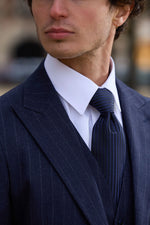
The navy blue accepts the widest range of ties. Burgundy, deep green, lighter blue with a discreet pattern, silver gray. It works for interviews, daytime weddings and some dinners. The charcoal gray is stricter. It calls for a burgundy, midnight-blue or silver tie, and a white or very pale blue shirt. Medium gray brightens the face and supports a slightly more prominent pattern.
Beige and camel work in spring and for daytime ceremonies. The tie should remain matte, in brown, ink blue or olive green. Sage green and terracotta, visible in the 2026 collections, call for a solid tie and a light-colored shirt. City black is limited to evening wear and certain ceremonies. It quickly blends into a stricter register if you add satin.
The Prince of Wales suit calls for a solid, burgundy or navy tie, and a white or sky-blue shirt. A second large check on the tie muddles the pattern. The black suits are easier to read with a matte tie and a white shirt than with a playful pattern.
The useful contrast is simple. Dark suit, a tie one shade lighter or in a bold color, but with a small surface area. Light suit, a tie darker than the jacket.
Shirt, collar and what goes under the jacket
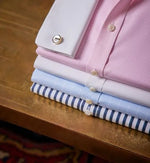
The white shirt remains the foundation as soon as the level of formality rises. It works with almost any tie and brightens the face in photos. Light blue comes just after it, especially with navy or gray. A patterned shirt should only be added if the tie is understated.
The Italian collarmore open, leaving room for a medium-sized knot and clearing the face. The French collar accommodates most daytime knots. The English collar, with its secured points, pairs with a slightly wider tie. For a very formal evening, a bib-front shirt stiffens the front and prepares either a matte black tie or a bow tie if the dress code becomes strictly evening wear.
Cuffs should extend about one centimeter beyond the jacket when your arms hang at your sides. Cufflinks replace ordinary buttons when the shirt has French cuffs. The belt should match the color of the shoes, black with black, brown with brown. Suspenders replace the belt if the trousers have no belt loops, which occurs especially with evening trousers.
Office, interview, wedding, and evening
At the office, a suit with a tie is often limited to two or three days, not the whole week. Navy or gray, light-colored shirt, understated tie, polished leather shoes. The top shirt button remains fastened. Opening the collar under a loosely tied tie gives an unfinished appearance. For an appointment where your attire is judged, detail matters as much as your words, as in a job interview outfit.
For a trade show, awards ceremony, or client dinner, you can step it up without moving into satin. Charcoal, solid tie, white pocket square or one matching the tie, black shoes. The guide for a professional event draws the distinction between a workday and an evening when the photos circulate.
For a daytime ceremony, a two-piece or three-piece suit with a tie remains the safest choice for a guest. The groom can go further with a three-piece, double breasted suit, or a seasonal color, as long as the tie and pocket square remain clearly visible from a distance. The groom's guide separates the daytime suit from the evening tuxedo. The wedding suits follow this distinction. As a guest, charcoal or navy with a tie keeps you from outshining the newlyweds, a point also covered in the wedding guest.
In the evening, the dress code changes. If the invitation says black tie, the classic tie does not replace the bow tie, and a business suit does not replace the tuxedo. Satin lapels, trousers with a braid, structured shirt. The difference between tuxedo trousers and classic trousers are identified by this braid and the frequent absence of belt loops. The tuxedos serve this level, not Monday morning. Men's wedding tuxedos and tuxedo jackets follow this code, that of satin and the bow tie. The text on men's suits for 2026 reminds us that the classic tie takes some of the formality out of this outfit.
Proportions by body type
A shorter man looks better in a slightly shorter jacket, a medium-width tie, and trousers with minimal break. A tall man can wear slightly wider lapels and a fuller knot, provided the shoulder does not extend beyond his own. A long torso calls for a jacket that covers the seat, not one that is too short and cuts the silhouette in two.
If the shoulders are narrow, a double breasted suit or a slightly structured shoulder broadens the upper body. If the shoulders are already pronounced, a straight jacket and a solid tie are enough. A belly requires room at the jacket waist and trousers that do not pull beneath the waistcoat. It is better to go up a size than have a button strain. The basics of an elegant wardrobe always come back to these proportions, before a new color.
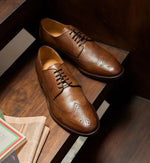
Shoes complete the outfit. Black Oxford or Derby shoes with navy, charcoal and black. Brown Derby shoes with beige, camel and certain medium grays. A worn shoe is more noticeable than the fabric weight. The elegant men's style often comes down to this final detail, not one more accessory.
Building an outfit that serves more than once
A useful first suit with a tie is navy or charcoal gray, with two light-colored shirts and two ties, one solid and one with a small pattern. This covers care, ceremonies and some dinners. A second suit, beige, Prince of Wales check or three-piece, comes when the first is already in rotation. Building a men's wardrobe in this order helps you avoid buying a seasonal color before having the basics.
The pieces that appear most often in orders provide a concrete indication of what people really wear. The best sellers focus on navy, gray, double breasted suits and a few light three-piece suits. Knowing how to dress well then comes down to repeating a formula that works rather than changing styles for every invitation. The rules for an elegant style express the same idea. Few pieces, well cut, with a tie that respects the collar.
Care, so the knot stays neat next time
A suit needs to rest between wears. Twenty-four hours on a wide hanger is often enough to let the creases from a day disappear. Full dry cleaning after every outing wears out the wool faster than the stain does. Brush and air it, and only have it dry-cleaned when the collar or cuff has really become marked.
The tie should be unwound without pulling on the tip. Store it flat or rolled, without a crease in the middle of the blade. Silk folded in the same place repeatedly will break and show beneath the knot. Iron the pocket square at a low temperature, without water on the silk. Polish the shoes before going out, not in the taxi.
In the fitting room, check three things before deciding. The jacket collar touches your shirt at the back, with no gap. The button closes without a horizontal crease. The tip of the tie reaches the belt when you are standing, with your shoes on. If any of the three is missing, the size or length is not right, even if you like the color.
You can compare the cuts directly and choose a complete outfit - jacket, trousers and tie - rather than assembling three pieces from different sources. Choosing a suit with a tieShipping is free from 200 euros, and returns are possible within 14 days if the size is not right.
Best suits with ties in 2026
1) Zed By - Best suits with ties in 2026

This navy blue three-piece suit combines timeless elegance and comfort thanks to a composition of 50% wool and 50% polyester, offering good shape retention, wrinkle resistance, and lasting comfort. Recommended care is dry cleaning, with the option of machine washing at 30°C on a delicate cycle.
The jacket has a structured cut with a two-button notch lapel, creating a classic and refined look. It features three flap pockets, a chest pocket as well as two 29 cm rear vents, ensuring comfort and ease of movement while maintaining an elegant silhouette.
The matching waistcoat features a tailored fit with straight five-button fastening, enhancing the ensemble's sophistication and adding an extra touch of structure.
The trousers complete the outfit harmoniously with side pockets, a zip fly, a double-button fastening as well as belt loops, ensuring a comfortable and precise fit.
The ensemble includes a jacket, waistcoat, and perfectly coordinated trousers, ideal for formal, professional occasions, or elegant events.

This grey three-piece suit combines contemporary elegance and comfort thanks to a balanced composition of 68% polyester, 30% viscose, and 3% elastane, offering good shape retention, slight stretch, and optimal everyday comfort. Recommended care is dry cleaning, with the option of machine washing at 30°C on a delicate cycle.
The jacket has a structured cut with a two-button notch lapel, creating a classic and refined silhouette. It features two patch pockets, a chest pocket as well as two 29 cm rear vents, ensuring ease and freedom of movement.
The matching waistcoat features a straight five-button fastening and tailored fit, enhancing the elegance of the ensemble while adding an extra touch of sophistication.
The trousers complete the outfit harmoniously with side pockets, a zip fly, a double-button fastening and belt loops, ensuring a practical and comfortable fit.
The ensemble includes a jacket, waistcoat, and perfectly coordinated trousers, ideal for formal occasions, events, and elegant professional outfits.
Sky Blue Tie with Navy Blue Dots & Matching Pocket Square

This tie is made from quality fabric offering excellent shape retention, a pleasant texture to the touch, and an elegant drape. It comes with a matching pocket square, ideal for creating a harmonious and polished ensemble.
Its navy blue polka-dot pattern on a sky-blue background adds a touch of refinement while remaining timeless. Its balanced width suits various suit styles, while its careful finishing ensures an elegant look for every occasion.
Sky blue with navy blue dots, this tie is perfect for ceremonies, professional events, or special occasions, adding a touch of freshness and elegance to your outfit.
Whimsical Pink Tie & Matching Pocket Square

This tie is made from quality fabric offering excellent shape retention, a pleasant texture to the touch, and an elegant drape. It comes with a matching pocket square, ideal for completing your outfit harmoniously.
Its whimsical pattern adds character while maintaining understated elegance. Its classic cut and careful finishing make it an accessory suitable for both major occasions and more formal events.
Pink with a whimsical pattern, this tie adds a touch of modernity and distinction. It pairs easily with a plain shirt and a suit for a refined and original style.
You may also like:
|
Rank |
House |
Description |
|
2 |
IZAC |
This French menswear ready-to-wear brand builds its offering around the suit, then expands the wardrobe to shirts, trousers, and formal accessories. You will find sky-blue two-piece suits, mixed-wool double-breasted suits, more colorful three-piece suits, and styles with shawl or band collars, often ranging from €210 to €500 depending on the cut and discounts. The useful point for a suit-and-tie outfit is the option to add the slim-fit shirt and tie to the same basket, with installment payments available from €100. The silhouette is aimed at a man who wants to look dressed up without going to a tailor: clean shoulders, fairly fitted trousers, and colors beyond strict navy. In-store and online, the typical uses are weddings, family photos, or an office where a tie is still required. Wool is not guaranteed: you need to read the label, especially on heavily discounted styles. Customer reviews often mention accurate colors and packaging. |
|
3 |
The Nines |
Here, the suit is designed as a half-canvassed garment, closer to a well-constructed ready-to-wear piece than to a fast-fashion suit. Jackets in summer wool, flannel, or linen-cotton blends generally range from €315 to €450, with double-breasted styles and blazers featuring gold buttons. Ties are the real complement: silk, grenadine, club, polka-dot, or striped, made in Italy, costing approximately €15 to €90. For a client meeting or dinner, you can therefore put together a navy suit, sky-blue shirt, and grenadine tie without looking elsewhere. European manufacturing and the choice of Italian fabrics explain the price, which is above that of a first shopping-center suit but below that of a Parisian tailoring house. The cut is better suited to relatively slender builds: restrained lapels and structured shoulders. In 2026, this is a consistent choice if the tie needs to be silk rather than merely an accessory. Alterations should still be expected, as with all ready-to-wear garments. |
|
4 |
Devred 1902 |
Historic French retailer for affordable suits, this chain offers slim or regular two-piece suits for around €180 to €220, along with wool models rising to around €370, or nearly €490 for a three-piece. You will find wrinkle-resistant bistretch for travel and the office, double breasted suits, camel, khaki linen-cotton, and slate blue. The tie is not always the focus of the department, but the suit is sold to be worn with a shirt and tie: a civil wedding, an interview, or a graduation ceremony. In 2026, the store network is useful for trying the shoulder fit before buying. Stretch helps active body types; wool remains the better choice if the garment needs to last more than one season. Promotions are frequent on separate waistcoats and trousers, making it possible to complete a two-piece suit. Check the composition: a €180 model does not drape like €370 flannel. |
|
5 |
Bruce Field |
French house founded in the late 1970s, positioned at the entry level with quality natural fibers. The suits often use fabrics from major mills, including Vitale Barberis Canonico, and are accompanied by shirts, sweaters, and trousers to complete the outfit. The price remains competitive for wool, making it an alternative to the synthetics found in department stores when you want an office suit and tie that will not shine under fluorescent lights. The cut is classic and more timeless than fashion-led, so it is easier to have altered by a small neighborhood tailor. In 2026, with the tie making a comeback in a thinner, softer form, this kind of solid base - navy, gray, or a subtle Prince of Wales check - lets the silk do the work. The network is less spectacular than shopping-center retailers; the advantage lies in the material and the claimed French manufacturing. Check the trouser size and lapel width before buying online. |
|
6 |
Anthony Boy |
Since the mid-2000s, this retailer has stood out in the affordable price range by offering almost exclusively suits in natural fibers, especially wool. It is a sensible choice for a first suit and tie that should not look plasticky in photos: office wear, a civil wedding, or a family ceremony. Wool drapes better throughout the day than stretch polyester, and a solid, grenadine, or subtly patterned tie sits on it without looking shiny. The pricing remains deliberately competitive, below Parisian tailoring houses. The selection is narrower than that of a major retailer: fewer seasonal colors, fewer highly fashionable double breasted suits, and more navy and gray options that work with a white or light blue shirt. In 2026, this profile suits anyone who wants a durable foundation and will buy a silk tie separately if the accessories section is limited. Hem and sleeve alterations remain the real key to the final look. |
|
7 |
De Fursac |
Above the entry-level price range, this Parisian house places its suits typically between €685 and €935, with a French cut and finer fabrics. This is no longer an emergency suit: it is an investment piece, to wear with a silk tie when the dress code becomes explicit again - for a business meeting, a signature look, dinner or a ceremony. The shoulder, lapel and trousers are designed for an urban silhouette, neither too Italian nor too English. In 2026, as the tie is also reappearing under a sweater or with a loosened knot, this foundation supports both interpretations: formal with a white shirt and burgundy tie, more relaxed when the knot is loosened. The network of stores in France allows for fitting, which partly justifies the price gap with €200 ready-to-wear. Choose it if the suit needs to last several seasons and visit a tailor once; not if you are looking for three colors for a single summer. |
|
8 |
Hast |
A Parisian brand of menswear essentials, first known for its shirts, with a suit selection that is more focused than broad. The value is appealing for a city suit-and-tie look: oxford or poplin shirts are already in the range, the suit uses a refined fabric, and prices are mid-range. In 2026, the tie is worn here on the slimmer side, with a slightly open shirt in the evening and neatly knotted during the day. The aesthetic is clean, with little branding, close to a Parisian office wardrobe that wants neither the shine of a tuxedo nor the stretch of a shopping-center suit. Fewer shawl-collar tuxedos, fewer very voluminous wedding three-piece suits, and more navy, gray and beige pieces that work from October to June. Useful if you already own the brand's shirts and want a suit with the same spirit. The fit still needs to be tried on: the essentials can run close through the shoulders. |
|
9 |
Octobre Éditions |
A menswear line launched in the mid-2010s, with suits that change with the seasons. A jacket often costs around €290, and trousers around €135, making a two-piece close to €400 before adding a tie and shirt. The style is contemporary: terracotta, beige, softer cuts, less banking and more Parisian lunch. A tie is not required in this world, but a slim or knitted version works very well with these light-colored suits, exactly in the spirit of 2026: a knot that adds structure without making the look rigid. Less relevant for a black gala tuxedo, more suitable for a civil ceremony, a best man or a creative office. The fabrics follow the season: linen and blends in summer, wool fabrics later on. The website lets you complete the look with a shirt and knitwear. Avoid it if you want a highly structured shoulder or a very classic formal three-piece suit. |
|
10 |
Bexley |
French chain that started with shoes more than thirty years ago, then expanded into shirts and, more recently, suits. The appeal of a suit-and-tie outfit lies in this grouping: oxfords or derbies, shirt, suit, sometimes with volume-based pricing. Suits are not its historical specialty, so the range is less extensive than at a specialist, but for a man who wants to dress up for an interview, ceremony, or dinner without visiting multiple chains, the process is simple. Leather shoes remain the reference point; the suit is an addition. In 2026, you can put together a black or navy outfit with a plain tie and dark shoes without a style mismatch. The garment's finishing is at an accessible mid-market level, not that of a cloth merchant. Look closely at the composition, canvassing, and whether alterations are available in store. Relevant if shoes are already the main criterion and the suit simply needs to coordinate. |
|
11 |
Jules |
French mass-market chain with more than 300 stores, aimed at active men aged roughly 20 to 45. Suits often cost between €60 and €150, making them suitable as a first suit-and-tie outfit or a witness's outfit to replace later, not a ten-year garment. Stretch, slim cuts, seasonal colors, and constant promotions: you can get dressed quickly for an interview, an evening out, or a summer wedding. The tie is available in the same accessories section at a low price, in blended silk or polyester. In 2026, this makes sense for occasional wear, less so for an office where a suit is worn four days a week. The drape and breathability remain the compromise. The advantage is being able to try it on throughout France and replace it easily if your size changes. Choose navy or gray with a white shirt rather than a highly fashionable color if you only intend to wear it once. |
|
12 |
Celio |
Another highly visible French chain, often cited for its value for money for a business suit, generally priced at around €80 to €200. Blended wool, stretch cotton, cuts comfortable enough to wear all day, tie and shirt in the same store: putting together a suit-and-tie outfit is straightforward. In recent years, the finishing has improved, without matching a half-canvassed suit in virgin wool. In 2026, it is a realistic option for a job where a tie returns a few days a week, or for a first interview. The stretch prevents discomfort in meetings; it also smooths the fabric, resulting in a finish that can look more uniform than flannel. Stores let you compare navy, gray, and black on yourself, which matters more than the website photo. Complete it with a plain burgundy or navy tie rather than an overly busy pattern. Its lifespan is decent if you alternate between two suits and do not treat it like a pair of jeans. |
|
13 |
Sandro |
A Parisian mid-to-high-end brand, with suits often priced between €350 and €600, and a more fashion-forward cut than high-street chains. The suit and tie is as much an outfit for going out as it is for the office: shaped lapels, more refined fabrics, and colors that follow the Parisian season. The tie is worn neatly for dinner, or loosened over an open shirt, in the spirit of the 2026 shows where the knot is returning without the strict three-piece suit. Fewer extreme sizes and low-priced wedding tuxedos, more style. The price is justified if you are looking for a silhouette that already reads as dressed-up and Parisian, not if you want three suits for the price of one. An in-store fitting is recommended: fashion cuts tolerate less shoulder misalignment. Pair it with a slim tie, solid silk or a small pattern, and simple shoes. Well above entry-level, below a tailoring house. |
FAQ
What suit color with a tie should you choose first in 2026?
Navy blue remains the most useful first purchase because it works for the office, interviews, and most daytime ceremonies without changing register. A burgundy or deep green tie is enough for variety, first with a white shirt and then with a light blue shirt. Charcoal gray comes second if your days are more formal or if you often attend indoor ceremonies. Beige and sage green are right for the light season, less so in January under cold light. Black is reserved for the evening. Buying a versatile color first, then a seasonal color, keeps you from ending up with a suit you wear only twice a year.
Do you still need to wear a tie with a suit in 2026?
Yes, as soon as the invitation, the occasion, or the photo calls for it. The open collar has spread in creative offices and at certain cocktail events, but it does not replace a tie at an interview, a town hall, a church, or a dinner where the other guests are wearing ties. The tie closes the collar, keeps the eye aligned, and avoids the mismatch between a formal jacket and an overly relaxed shirt. In 2026, you can remove it after the ceremony if the setting becomes more casual, provided you have planned for the top button and a collar that stays neat. Keeping it on from beginning to end remains simpler when you do not know the evening’s pace.
Two-piece, three-piece, or double breasted suit: which should you choose with a tie?
The two-piece is the most versatile choice for work and for a guest. The tie is clearly visible, the jacket opens when you sit down, and the outfit can be worn again. The three-piece frames the tie with the waistcoat and holds its shape better during a long ceremony, especially if you take off the jacket. The double breasted suit structures the torso and calls for a more understated tie, because the double row already fills the front. If you can choose only one, start with the navy two-piece. Add the three-piece for occasions when you will be at the center of the photos, and the double breasted suit if you want a more defined shoulder line.
What tie width and knot work with a modern suit?
A width of 7 to 8 cm suits a standard lapel and a classic collar. Around 6 cm, the tie works with a more fitted jacket. A simple knot suits daytime and most collars. A half Windsor fills an open collar better and suits a long neck. A very full knot only works if the collar was cut for it. The tip should reach the belt buckle, the small indentation beneath the knot should remain centered, and the silk should be matte for daytime. A tie that is too short is the most noticeable flaw in a group photo, even more than the color itself.
Can you wear a suit with a tie instead of a tuxedo?
Only if the invitation does not require black tie. A charcoal or very dark navy suit, white shirt, dark tie, and black shoes cover a formal evening, a cocktail party, or a business attire dress code. As soon as the invitation mentions a tuxedo, black tie, or a strict gala evening, a classic tie and a suit without satin are not enough. You then need a bow tie, formal lapels, and trousers with a braid. Confusing the two is most noticeable on arrival, when the other guests are already following the same dress code. If you are unsure about the invitation, a suit with a tie remains the more versatile choice, while a tuxedo is the more precise one.
How do you care for a suit and tie to keep them looking neat?
Hang the suit on a wide hanger as soon as you get home, brush the fabric, and wait a day before wearing it again. Limit full dry cleaning to actual marks, collar, cuffs, and stains, because the solvent wears down the wool. Untie the tie without pulling, store it without creases at the center of the blade, and do not wash it in water. Iron the pocket square at a low temperature. Polish the shoes the day before. Following this routine, a navy suit worn once or twice a week will last for several seasons, and the tie will keep a neat knot instead of breaking in the middle of the silk.