Best work suits for men in 2026
Oct 10, 2026The work suit for men in 2026 has not disappeared from offices. It has simply stopped being automatic. In banking, law, auditing, and some areas of consulting, the suit remains the standard outfit. In tech, agencies, and many hybrid offices, it becomes a piece you bring out for the client, the committee, or the interview, since you wear the rest as separates during the week. The best work suits for men in 2026 are therefore judged on one simple thing: their ability to stay crisp from the first coffee to the last appointment, without forcing you to change outfits between two settings. Discover the best work suits for men in 2026.
What your industry really expects from a suit

Before the color, look at the culture of the workplace. In finance, professional firms, and legal departments, the plain two-piece suit, navy or charcoal, with a light shirt and smooth leather shoes, remains the safest choice. A large pattern, a light shade, or clean sneakers will be seen as a context mistake, not a style choice. In consulting and large corporations, the suit still holds its own on client days, then gives way to a separate jacket. In sales and real estate, the outfit should remain approachable, so medium gray or a rich blue, often without a tie, works better than a closed-off black.
Tech and creative professions do not ban suits. They change how they are used. You will get the balance right with a well-cut jacket and dress trousers rather than an overly strict suit, which makes it feel like an interview when the meeting is internal. To set this balance before a decisive appointment, the guide to dressing for a job interview sets out the levels by profession, and the text on the professional event works when the day takes you outside the usual office setting.
The right level is generally one step above the everyday standard of the position, never two.
Colors and patterns that work all year in the office
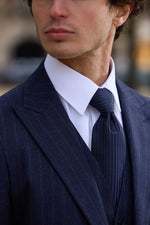
The navy blue remains the most versatile color. It works with a white shirt, a sky-blue shirt, and a discreet Oxford shirt; it can be worn as separates with gray trousers; and it does not look dated between seasons. The charcoal gray is stricter, and therefore more useful for interviews, audits, and management meetings. Medium gray, meanwhile, opens up more combinations during the week, including a lightly tinted shirt, without veering into a light shade that shows marks too quickly.
Black has a place, but it is narrower than people think. It works in the evening, for certain very formal settings, and in winter in the city. Every day, it absorbs dust, hardens the face under neon lights, and can be hard to distinguish from a tired pair of dress trousers. Prince of Wales and pinstripes have their uses, provided the pattern stays small. A blue suit covers most weeks, a gray suit covers the days when you want less contrast, and a Prince of Wales comes as a third piece, not a first. The article on blue suits explains the nuances if you are hesitating between midnight, navy and steel.
Cut, shoulders and ease over a real day
The cut determines the look more than the listed price. The shoulder should reach the bone, without extending past it or pulling. The jacket collar should lie flat against the shirt. You should be able to cross your arms and reach for a file above you without the front opening like a fan. A cut that is too slim becomes tiring by the end of the morning, while one that is too loose makes the jacket float as soon as you remove the tie.
In 2026, demand is shifting toward a fitted but mobile line, with a little ease in the arm and upper thigh. Body-shape data helps explain why older sizes feel restrictive. The French Institute of Textiles and Clothing states in its 2025 men's anthropometric booklet that the average height is 178.1 cm, compared with 175.6 cm in 2006, based on its representative sample. Narrow shoulders and short trousers cannot be fixed with a belt. If you are starting from scratch, the first suit determines the order of fittings, and the choice between high-rise and low-rise settles the question of how the trousers break over the shoe.
We cut our men's suits for this daytime wear, with sizes ranging from 46 to larger builds, so alterations are limited to the hem and, sometimes, taking in the waist.
Fabric, season and wrinkle resistance
A work suit has to withstand the subway, air conditioning and the meeting room. The fabric must therefore hold its shape without becoming armor. Wool, alone or blended, remains the most sensible material for the office because it breathes, regains its drape and shows fewer marks than sealed polyester. A little elastane, around 2 to 3%, helps on days spent sitting, provided the fabric does not shine. Flannel has its place from October to March. The tweed is suitable for cold offices and winter appointments, not overheated rooms in July.
In summer, cool wool or a lightweight blend prevents the shirt from sticking under the jacket. Pure linen wrinkles too much for a day with clients, unless your industry accepts that texture. Heavy black fabric and a heavy lining are the two most common mistakes once the temperature exceeds 25 degrees. For long weeks, it is better to have two seasonal fabrics than one suit worn without rest, because the fiber needs a night on a hanger to recover.
Two-piece, three-piece, or double breasted, depending on the role
The two-piece suit is the workhorse. It can be removed, mixed and matched, and go from an internal meeting to lunch without changing register. The two-piece suit navy or charcoal should be the first purchase if you only have one. The three-piece suit adds the waistcoat, useful in a cold open-plan office, at an awards ceremony, and on days when you remove the jacket without wanting to look undressed. It is less versatile for mixing and matching, so it comes second. The three-piece suits and the overview of three-piece suits in 2026 help you see when a waistcoat really adds something.
The double breasted suit creates more structure across the chest. It suits presentations, board meetings, and silhouettes seeking a sharper line, provided it is buttoned as designed, leaving the bottom button open. A double breasted suit is not the model to wear open all day. A tuxedo, meanwhile, does not replace an office suit. It remains reserved for gala events and evenings, as the page tuxedo and the guide to a gala evening.
Shirts, ties, and shoes that hold the outfit together
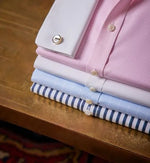
A jacket cannot save a tired shirt. For the office, three shirts cover almost everything: one white, one sky blue, and one Oxford or fine-striped shirt. The collar should remain crisp under the jacket, and the sleeve should show about one centimeter of cuff. A tie is no longer universal. It is still expected in banking, consulting, and some areas of auditing. Elsewhere, a buttoned collar without a tie, or opened one notch after the meeting, is enough, provided the fabric is matte and pressed.
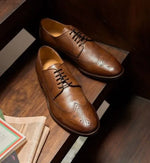
Smooth leather shoes, black with charcoal and strict navy, dark brown with medium gray and blue, anchor the outfit better than even a clean sneaker. The belt matches the shoes. Socks match the trousers, not the shirt. The details of these combinations can be found in the pieces that go with a suit and the overall logic of a wardrobe built around a suit. The rules of elegant style and the foundations of an elegant wardrobe help you avoid buying a fourth jacket before you have two pairs of shoes.
Budget, rotation, and actual lifespan
Price does not tell the whole story, but it frames the use. A suit worn ten times a year has different requirements from a model worn three days a week. Based on the guidelines we publish on price of a good suit, an occasional piece often costs between 100 and 250 euros, regular office wear between 250 and 600 euros, and bespoke more than that, with different lead times and levels of fit. The comparison ready-to-wear, made-to-measure, or bespoke suits you if your body shape falls outside standard sizes.
The market helps put this trade-off into perspective. The French Fashion Institute, cited by Défi Mode, puts the French clothing market at 34.7 billion euros in 2025, down 1.3% in value, with stores down 2.7% and e-commerce up 1.2%, representing 30.4% of sales. In the first half of 2025 alone, IFM ranked T-shirts, jeans, and shirts as the leading men's purchases by quantity. A suit is therefore no longer a volume purchase. It is a long-term purchase, which justifies having two rather than wearing a single one until it wears out. Businesscoot also notes that men's ready-to-wear grew by only 0.3% in 2024, and that 58% of French people describe themselves as considered shoppers, committed to durability and perceived quality.
We ship within 24 hours, with free delivery on orders over 149 euros and returns within 14 days, allowing you to try the actual size at home before finalizing the hem. The best sellers give an overview of the models already worn during the week.
|
Industry or use |
Useful color |
Main piece |
Tie |
Point to watch |
|
Banking, law, audit |
Navy or charcoal |
Solid two-piece |
Yes, solid or micro-pattern |
Avoid a wide pattern |
|
Consulting, group headquarters |
Navy, medium grey |
Two-piece, vest depending on the day |
Depending on the schedule |
Cut too tight for a long meeting |
|
Retail, real estate |
Grey or rich blue |
Two-piece, sometimes mismatched |
Often no |
Shoes not maintained |
|
Tech, agency, digital |
Navy as a separate jacket |
Blazer and dress trousers |
No |
Suit too ceremonial |
|
Winter, cold open-plan office |
Charcoal, tweed |
Three-piece or flannel |
Option |
Fabric too thin under reverse air conditioning |
|
Summer, client meeting |
Navy, medium grey |
Lightweight wool, two-piece |
Option |
Heavy black, heavy lining |
Maintain the suit so it stays presentable
A work suit needs to rest. Twenty-four hours on a wide hanger after a day of wear is often enough to release subway wrinkles. Dry-cleaning the entire suit after every wear wears down the fiber. A brush, a steamer held at a distance, and dry-cleaning every five to eight wears help preserve the color. You alternate between two models, change your shirt every morning, and have the hem adjusted as soon as it touches the ground.
The formal style guide recalls the differences between the office, cocktails, and evening events, so you do not wear a work suit for settings that call for a different garment. If you expand your wardrobe afterward, the chic men's wardrobe and the text on dress well place the suit at the center, not as an isolated piece.
You can compare the cuts directly in the collection and choose the model that already works for your next Monday, rather than one that only serves once a year. Choose a ready-to-wear business suit this week.
Best soft leather loafers for men in 2026
1) Zed By - Best soft leather loafers for men in 2026
Ocean Blue Cold Wool Three-Piece Suit

This three-piece sky-blue fil-à-fil suit combines refinement and comfort thanks to a composition of 53% wool, 43% polyester, and 4% elastane, offering a good balance between natural shape retention, durability, and flexibility. Recommended care is dry cleaning, with the option of machine washing at 30°C on a delicate cycle.
The jacket has an elegant cut with a two-button peak lapel, creating a classic and polished look. It features a two flap pockets, a chest pocket as well as two 29 cm rear vents, ensuring comfort and freedom of movement while maintaining a structured silhouette.
The matching waistcoat features a tailored fit with a straight five-button fastening, enhancing the elegance of the ensemble and adding an extra touch of sophistication.
The trousers harmoniously complete the outfit with side pockets, a zip fly, a double button fastening as well as belt loops, ensuring a comfortable and precise fit.
The outfit includes a perfectly coordinated jacket, waistcoat, and trousers, ideal for formal occasions, events, or elegant everyday wear.
Grey Flannel Prince of Wales Double Breasted Suit

This grey Prince of Wales check suit stands out for its timeless elegance and modern cut. Made from a fabric composed of 68% polyester, 29% viscose, and 3% elastane, offering a good balance between comfort, shape retention, and slight stretch to accommodate movement. Recommended care is dry cleaning, with the option of machine washing at 30°C on a delicate cycle.
The jacket has a tailored fit with a six-button double-breasted peak lapel, creating a structured and sophisticated look. It features a two flap pockets, a chest pocket as well as two 29 cm patch pockets, offering both style and functionality.
The matching trousers complete the ensemble with side pockets, a zip fly, a double button fastening and belt loops, ensuring a comfortable fit and an impeccable appearance every day.
The outfit includes a perfectly coordinated jacket and trousers, ideal for dressy occasions, ceremonies, or elegant professional attire.
Double Breasted Fil-à-Fil Suit

This sand embodies contemporary elegance with its tailored fit and meticulous finishes. Made from a blend of 78% polyester and 22% viscose, offering an excellent balance between comfort, durability, and an impeccable fit, ideal for ceremonies, formal events, or dressy occasions.
The jacket features a six-button peak lapel, a chest pocket as well as a three flap pockets. Its two 29 cm rear vents provide greater freedom of movement while adding an extra touch of elegance. The matching trousers are equipped with side pockets, a zip fly, a double button fastening and belt loops for optimal support and a customized fit.
The outfit includes a jacket and a trousers perfectly coordinated for a harmonious and refined silhouette.
To preserve the fabric's quality and the suit's shape over time, dry cleaning is recommended. A machine wash at 30°C may also be considered for a delicate cycle. It is recommended to follow the care instructions on the product label to preserve its original appearance over time.
You may also like:
|
Rank |
Brand |
Description |
|
2 |
Celio |
French retailer with a strong presence, with office suits often ranging from €80 to €200, blended wool or stretch cotton, and ties and shirts available in the same place. In 2026, it is a realistic starting point for a job where the jacket is worn a few days a week. Stretch prevents discomfort in meetings; it smooths the fabric, resulting in a more uniform appearance than flannel. Compare navy, gray, and anthracite on yourself. A solid burgundy or navy tie for days when a knot is required. Reasonable durability if you alternate between two suits. The shoulder is the point to check: a mismatch in shoulder width shows on video calls as well as in the room. Not the place to look for virgin wool. The fitting room, sitting and then standing, shows whether the trousers will last through the day. |
|
3 |
Devred 1902 |
Established workwear suit retailer, with slim or regular two-piece suits around €180 to €220, wool options around €370, and wrinkle-resistant bistretch fabric for train travel. Stores in Paris and throughout France. Shirts and ties available on-site. In 2026, the key is to try on the shoulder fit, then get a second pair of trousers on sale: the trousers wear out before the jacket. Stretch helps if you move around; wool remains the right choice if the suit is worn four days a week. A €180 model does not drape like flannel. Navy and slate gray work for client meetings. Plan for the hem. Under fluorescent lights, synthetic fabric shines: check the composition before paying. |
|
4 |
IZAC |
French retailer, with boutiques in Paris including Beaugrenelle; business suits often range from €210 to €400, or less on sale. Navy, gray, a more formal double breasted style, slim shirt, tie, alterations, and split payments from €100. In 2026, it is a step above a chain for an office where ties are making a comeback. The clean shoulder line and tailored trousers require trying them on: a jacket that is too tight becomes tiring by 5 p.m. Wool is not standard. The sales assistants complete the outfit. Wide range of sizes. Fewer evening tuxedos, more two-piece suits that work all week. The hem is still useful. You can keep two navy suits and alternate the ties rather than change the cut. |
|
5 |
The Nines |
Half-canvassed wool suit, often between €315 and €449, for an office that wants something better than stretch. Silk ties, from €15 to €90. Restrained lapels, structured shoulder, better suited to a slender silhouette. In 2026, this is for client meetings or consulting, not a suit to discard at the end of the season. European production explains the price. Sleeve alterations should be planned. Navy, gray, few colors that date. A grenadine tie is enough on formal days; take it off on Friday. Less relevant if you are looking for three suits for the price of one. The wool does not shine in the meeting room. |
|
6 |
Jules |
French mass-market chain, more than 300 points of sale, work suits often between €60 and €150. Stretch, slim, navy and gray, ties in the same department. In 2026, this is for a first interview or an early-career wardrobe, not a suit to wear four days a week for five years. The drape and breathability remain the compromise. Trying it on without an appointment avoids a sizing mistake. Synthetic fabric can shine on video calls. Solid navy, white shirt, burgundy tie on required days. Easy to replace if body shape changes. Plan for hemming. Useful for getting started, with a wool suit added as soon as the pace becomes daily. |
|
7 |
De Fursac |
Parisian house, city suits often between €685 and €935, boutiques in Opéra, Richelieu, Francs-Bourgeois, and Saint-Germain. In 2026, this is the investment piece for a role where the suit is the outfit, not the exception. Silk tie on signing days, jacket open the rest of the time. Alterations included outside sales and shop-in-shops. The fitting matters: the slim cut does not tolerate shoulders that are too broad, and the jacket is worn sitting down for hours. Less relevant for three colors in a single year. Two suits, navy and gray, cover the week. The price is justified if the same jacket works for several office seasons. |
|
8 |
Suitsupply |
Boutique at 18-20 Rue de la Paix, work suits often between €300 and €600, shirts around €80 to €100, wall of ties. No appointment needed, on-site tailor. In 2026, this is the place for an already-adjusted two-piece worn several days a week. The hem and sleeve alterations are done before the week begins, not afterward. Made-to-measure available. The street’s prestige pushes the price above that of a shopping arcade. Less relevant for a first salary. Relevant if the customer sees the jacket every day. It is better to try it on sitting down: office trousers that pull at the knee are noticed in the fitting room, not in the photo. |
|
9 |
BOSS |
Brand with a strong presence in France, with office suits often priced between €400 and €800, structured shoulders, navy and gray. Shirts and ties in the same network. In 2026, it is an immediately legible look for meetings, without a tailoring workshop. The construction holds up better than mall stretch; it remains ready-to-wear. Fitting matters, especially if you stay seated for long periods. Alterations vary by store. Relevant for a role where the tie is making a comeback. Less interesting for highly developed made-to-measure. Two colors are enough. The discreet logo works in a corporate setting; an overly fashion-forward double breasted suit dates faster than a two-button suit. |
|
10 |
Boggi Milano |
Milanese retailer in Paris, with wool city suits, shirts, and ties in the same store. Soft drape, suited to the day. In 2026, it is a navy or gray two-piece for the office, with a knot on client days. Upper-mid-range price. Trying it on prevents a shoulder mistake. Fewer tuxedos, more pieces that work under a coat from November to March. Check the composition and plan for hemming. The tie department completes the outfit without needing a second retailer. Relevant if you wear a suit five days a week and chain-store stretch has shown its limits. Daylight reveals whether the gray is too light for the room. |
|
11 |
Bruce Field |
French house founded in the late 1970s, with work suits in serious fibers and fabrics often sourced from major cloth merchants. Priced above a chain and below a tailor. Classic cut, easier to alter, wearable while seated. In 2026, it is officewear that does not shine under fluorescent lights. Navy, gray, subtle Prince of Wales check. Slim tie. Less extensive network. Check the lapels, sleeve, and jacket-trouser matching. Matte wool holds up better through the week than polyester. Relevant if the suit is everyday clothing and the budget exceeds entry-level pricing. Have the hem done by a small tailor. |
|
12 |
Anthony Boy |
French brand that mainly offers wool suits, so more coherent workwear pieces than shiny stretch. Reasonably priced. The drape holds up through the day and on video calls. Use: interviews, clients, office. Solid-color tie. Narrower range, navy and gray. In 2026, it is an everyday foundation without Italian half-canvas construction. Sleeve alterations are the real lever: a sleeve that covers the wrist when typing at a keyboard. Fewer stores. The size guide helps avoid an overly formal jacket built for the open-plan office. Two pieces are enough. Alternate shirts rather than cuts. |
|
13 |
Bexley |
French retailer that started with footwear, useful for work because derby or oxford shoes and the suit can be bought in the same place, along with the shirt. Suits are not its historical specialty: the range is less extensive, with tiered pricing. In 2026, you can put together a navy outfit, a solid tie on days when required, and dark shoes for an interview or the workweek. The fitting room checks the fabric composition, canvas construction, and sleeve. A jacket that is too structured becomes tiring at the office. The hem will often still need adjusting. Relevant if dress shoes were the obstacle and the suit simply needs to be coherent, without visiting a second store. |
FAQ
What work suit should you wear to the office in 2026?
The safest work suit in 2026 remains a solid two-piece suit in navy blue or charcoal gray, made of wool or a good blend, with a tailored cut that lets you move your arms. It covers interviews, committee meetings, and most client appointments, then can be worn as separates if your office is more relaxed midweek. Add a white or sky-blue shirt, smooth leather shoes, and, only if the profession expects it, a understated tie. A three-piece suit comes next, for cold days and days when you remove the jacket. A pattern, a double breasted suit, or a lighter shade should wait until you have this foundation, because they are worn less often and are less easy to coordinate with the rest of your existing wardrobe.
Should you choose navy blue or charcoal gray?
Navy blue is the most versatile throughout the year because it works with more shirts and can be worn as separates without disrupting the outfit. Charcoal gray is stricter, so it is better suited to interviews, auditing, and facing a committee that still sees the suit as a sign of rigor. If you are buying only one suit, choose navy. If you are buying two, choose navy and charcoal, or navy and medium gray if your week combines client-facing and internal work. Black should be reserved for the evening and certain highly formal settings. Avoid light shades as your first work suit: they show marks more quickly and reduce the number of settings where you can wear them without wondering whether the outfit is too light.
Is the three-piece suit suitable for everyday work?
The three-piece suit is suitable for work if you often remove your jacket, if the rooms are cool, or if your position calls for a more polished look without wearing a tie every hour. The waistcoat keeps the shirt in place, lengthens the silhouette, and lets you remain presentable in shirtsleeves. It is less practical if you walk a lot, take the subway during hot hours, or wear the jacket separately with chinos. In that case, the two-piece suit remains more flexible. Many men keep the three-piece suit for two or three days a week, and the two-piece suit for the rest. The waistcoat should be buttoned while standing and opened while seated, so it does not pull at the waist after lunch.
Is a tie still mandatory with an office suit?
A tie is mandatory only in professions where it is still expected, particularly investment banking, parts of the legal profession, auditing, and some client-facing wealth-management businesses. Elsewhere, a suit with a crisp shirt, collar closed or open by one button, reads as a complete work outfit. The risk is not the absence of a tie, but a shirt opened too low, shiny fabric, or shoes that clash with the jacket. For an interview, you can arrive wearing a tie and remove it if the team is not wearing one. The reverse is impossible. A plain tie in navy, charcoal, or deep burgundy is enough. Large patterns and bright colors limit the suit's versatility without adding credibility.
How many suits do you need for a week at the office?
Two suits are enough for a week when you are in the office three or four days, provided you change your shirt every morning and let the jacket rest overnight. Three suits become useful if you meet clients almost every day, or if winter and summer call for two different fabric weights. A single suit worn continuously develops marks at the elbows, loses its color, and smells of dry cleaning. The simplest rotation is navy, charcoal, then a seasonal piece, flannel or tropical wool. You do not need a suit for every day. You need two outfits to alternate, and alternating shoes, because leather also needs to dry between wears.
How can you make a work suit last for several years?
You make it last by letting it rest, brushing it, and spacing out dry-cleaning visits. A wide hanger, a breathable garment bag during the off-season, and having the hem taken up as soon as the trousers touch the ground prevent visible wear. You do not machine-wash a suit if the label says dry clean. You treat a local stain immediately rather than sending the entire jacket for solvent cleaning every week. Two suits worn in rotation last longer than a more expensive one worn without a break. A waist alteration made after a few days of actual wear improves the fit more reliably than changing brands. Stored dry, brushed, and taken out the day before, a good office suit remains presentable for several seasons.
Discover the best soft leather loafers for men in 2026 - Zed by