Best suit jackets for men in 2026
Oct 06, 2026The best men's suit jackets in 2026 are recognizable by a clean drape, a shoulder that rests on the bone, and fabric that holds up throughout the day without shining under office lighting. You are not just buying a jacket. You are choosing the piece that structures the suit, the wedding, the interview, and the evening, and that must still look right after several seasons of wear. A suit jacket too short ruins the silhouette, a jacket that is too narrow at the shoulders cannot be fixed through alterations, and fabric that is too lightweight wrinkles at the first meeting. The right model, by contrast, can be worn buttoned without pulling, lets the shirt breathe at the collar, and coordinates with trousers from the same fabric family. Discover the best men's suit jackets in 2026.
This page reviews the cuts, materials, colors, and uses that make a jacket useful in 2026, from a city two-piece suit to an evening jacket. If you are still putting together your first formal outfit, the guide to getting started with a first suit sets the framework, and the suit jackets allow you to compare the lines directly.
What sets a successful suit jacket apart this year

In 2026, the suit jacket has become slightly longer and the shoulder has softened. The proper length covers the seat, the lapel remains classic, and excessive padding is giving way to a more natural line. That does not mean a limp jacket. Good construction retains the chest, keeps the collar against the nape, and lets the arm move forward without making the entire sleeve ride up.
Three points determine almost the entire look. The shoulder should reach the acromion, without extending beyond it or dipping inward. On a two-button jacket, the middle button should fasten without a horizontal crease across the stomach. The sleeve hem should reveal about one centimeter of shirt cuff, which requires a shirt with the correct cuff length. A jacket that hangs loose in the back or pulls at the middle button is not your size, even if the label matches what you usually wear.
The two-button closure remains the most widespread standard, accounting for around 80% of the offerings observed in 2026, because it elongates the torso and suits most body types. The three-button jacket is mainly suited to taller sizes, while the double-breasted jacket has a more formal role. You can see these construction differences in the two-piece suits and in double-breasted suits.
Figures that help put the purchase into perspective
Statistics have no place in choosing a color, but they shed light on the market in which you are buying. The global men's suit market was estimated at $13.5 billion in 2024, with a projection of $16.8 billion by 2030, representing average annual growth of 3.8%. Wool accounted for approximately 50.9% of sales by material in 2025, ahead of blends and synthetic fibers. In other words, demand for suits has not disappeared. It has focused on pieces that people actually wear, both at the office and at ceremonies.
Fabric weight follows the season more than fashion. Wool weighing 200 to 240 g/m² is suitable for summer and air-conditioned rooms, wool weighing 250 to 280 g/m² covers the shoulder seasons and most of the year indoors, while heavier tweed should be reserved for the cold months. For regular wear, Super 110 to Super 130 offers the best balance between softness and durability. Super 150 is finer and more delicate, and is best reserved for infrequent occasions.
|
Jacket type |
Buttoning |
Main use |
Most suitable fabric |
Indicative weight |
|
Two-button suit jacket |
2 buttons, 1 fastened |
Office, appointment, daytime ceremony |
Worsted wool or good blend |
250 to 280 g/m² |
|
Double-breasted jacket |
4 or 6 buttons |
Formal meeting, evening, wedding |
Wool, lightweight flannel |
250 to 300 g/m² |
|
Blazer |
1 or 2 buttons |
City, cocktail, separates |
Tropical wool, cotton, tweed |
200 to 320 g/m² depending on the season |
|
Tuxedo jacket |
1 button, shawl or notch lapel |
Gala, formal dinner |
Wool with satin lapels |
240 to 280 g/m² |
|
Three-piece jacket |
2 buttons, with waistcoat |
Wedding, winter, highly structured outfit |
Wool, tweed, Prince of Wales check |
260 to 340 g/m² |
These guidelines help you rule out poor fabrics before even trying on the size. Shiny polyester under indoor lighting, a blend that puckers at the elbow after two hours of sitting, or wool that's too fine for weekly wear will cost you more to replace than a slightly denser fabric bought from the outset. The budget breakdown, from the first suit to the more refined fabric, is covered in the article on the price of a good men's suit.
Straight, fitted, or double-breasted cut: how to decide
Choose the cut based on your torso, not on a photograph. A tailored cut follows the waist without clinging to the stomach or restricting the arm when you cross your hands in front of you. A straight cut leaves more room around the chest and hips, which is suitable if you spend the day sitting or have a fuller build. The double-breasted jacket, prominent in formal outfits in 2026, requires a stable shoulder line. It is worn closed, never open like a blazer, and visually shortens the torso if the length is too short.
To check a jacket in the fitting room, or at home after delivery, make four simple movements.
- Fasten the middle button and sit down. The fabric should not gape widely over the stomach.
- Raise your arms to shoulder height. The jacket may rise slightly, but it should not remain stuck at the neck.
- Look at your back in a mirror. A horizontal crease beneath the collar indicates shoulders that are too wide or a poorly set neckline.
- Check the sleeves. They end at the wrist, with the shirt extending by about one centimeter.
If the shoulder is wrong, change sizes. A tailor can alter a sleeve, a side, or the button opening, but cannot reconstruct the shoulder structure. The most common mistakes - choosing a size based on the neck circumference rather than the shoulder, choosing the trousers before the jacket, and buying a color for a single photo - are detailed in the common mistakes when buying a suit.
The jacket of a three-piece suit is judged with the vest fastened. The vest should cover the belt, and the jacket should be able to close over it without pulling. For an evening when the dress code is stricter, the comparison with double-breasted tuxedos avoids mistaking a city jacket for a gala jacket.
Materials to consider for a frequently worn jacket
Worsted wool remains the safest material for a suit jacket worn several times a month. It breathes, regains its shape on a hanger, and tolerates dry cleaning better than a highly synthetic blend. Lightweight, open-weave wool is suitable from spring through autumn and for heated rooms. Flannel, softer to the touch, is better for winter, provided you do not choose one that is too heavy if you work indoors.
Wool and polyester blends have a practical advantage. They wrinkle less, cost less, and can handle occasional use, such as a friend's wedding or an interview, without requiring dry-cleaning-level care. They become a poor choice when the synthetic content dominates and the surface catches the light. Check the label, then examine the fabric in daylight. A matte fabric, even a blend, remains dressier than a shiny fabric marketed as wool.
Tweed and Prince of Wales check change how a suit is used. Tweed is a cold-season jacket, worn with trousers made from the same fabric or with darker solid-color trousers. Prince of Wales check, a pattern of overlapping small and large checks, requires a clean cut so it does not broaden the silhouette. You will find them in the tweed suits and the Prince of Wales suits. For summer, cold wool or a lightweight blend is better than pure linen, which creases as soon as you sit down.
We have been working with these fabric families since 1981, creating jackets designed to be worn, not merely displayed. A cold wool blazer can cost around €89, and a complete suit around €149 to €189 depending on the model, making it possible to start with a well-chosen piece rather than a fragile fabric.
Colors that truly work in a wardrobe
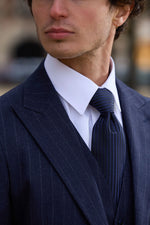
Navy and charcoal gray cover most of the working week. Navy pairs with a white shirt, a light blue shirt, and black or dark brown shoes. Charcoal gray is more urban, and it works better with a white shirt when the day is formal. Medium gray brightens the face, provided the fabric does not pull toward beige under yellow light.
Black is not the default office color. It is for evening wear, certain ceremonies, and very strict dress codes. For a gala, a black jacket with satin lapels belongs to a tuxedo, not a business suit. The difference is covered in the best tuxedo jackets and in the collection of tuxedos. If your schedule mixes the office and dinner, a well-cut navy suit will serve you more often than a black one.
For a daytime wedding, gray, navy, and certain structured beige shades remain the most versatile. White and very light shades should be reserved for a specific role, the groom or a witness depending on the ceremony's dress code, and should be judged with the shirt and shoes, not alone on a hanger. The wedding suits, the gray suits and the blue suits let you compare these basics before adding a pattern.
Single jacket, blazer, or suit jacket
A suit jacket belongs to a matching suit. The fabric, color, and often the button finish are the same as those of the trousers. Wearing it with chinos can work if the fabric is understated and the cut is clean, but it is no longer a suit. A blazer, on the other hand, is designed to be worn separately. It is worn with trousers in a different shade, often lighter or darker, and it can feature more visible metal or horn buttons.
The double breasted blazer holds a special place in 2026. It structures a cocktail outfit without using the full suit, provided the trousers remain dressy and the shirt is not too casual. For a professional event, a matching suit jacket remains safer than a blazer because the dress code is easier to read. Details of outfits by appointment type can be found in the article how to dress for a professional event.
If you are starting with trousers already in your wardrobe, the suit jacket should use the same material family and a very similar color, or a deliberate blazer contrast. Mixing a flannel jacket with lightweight cotton trousers almost always creates a visible difference in drape. The suit trousers and the guide to suit trousers help maintain this coherence. The selection of suit jackets is particularly useful when you are looking for the top piece before completing the outfit.
Which suit jacket for the office, a wedding, and the evening
At the office, a two-button suit in navy or grey, with a plain shirt and smooth leather shoes, covers interviews, client meetings, and most formal days. The tie remains connected to the profession. In an open-plan office, you can open your suit jacket once seated, but button it when arriving and standing up. The dress codes are covered in the formal style guide and in the article on job interview.
For a wedding, the suit follows your role. The groom can wear a three-piece, a double breasted suit, or a more personal shade if the ceremony allows it. The guest should be less striking than the groom, with navy, grey, or a subtle pattern. The groom's guide and the three-piece suits clarify these differences better than a single outfit photo.
Evening changes the suit, not just the tie. A gala evening calls for a tuxedo, shawl collar or satin notch lapel, dress shirt, and no visible everyday belt. A formal evening without a black tie dress code accepts a dark suit, often black or very dark navy, with a discreet pocket square. The gala suits, the evening suits and the article how to dress for a gala evening separate these two levels. The black suits and the blue suits cover the rest of the formal wardrobe.
Shirt, shoe, and length: the details that make the suit
The jacket should not be judged on its own. The shirt collar should extend about one centimeter above the jacket collar, and the cuff should show when the arm hangs by the side. A shirt that is too large at the neck makes the jacket appear too wide, whereas the problem lies elsewhere. The men's shirts in white and sky blue remain the two most useful basics with a suit jacket.
The shoe anchors the outfit. Smooth black leather with a black suit or tuxedo, black or dark brown leather with navy, brown with gray or beige. Sneakers, even leather ones, make the jacket more casual. The pieces that complete the outfit, a belt matching the shoes, a discreet pocket square, and a solid tie, are listed in the essential pieces to wear with a suit.
The trouser length matters just as much as the jacket length. A break that falls too heavily on the shoe weighs down a clean-cut jacket, while an excessively short hem cuts off the leg beneath a long jacket. If you are building your wardrobe in order, start with two jackets, navy and gray, then add shirts and shoes. The rules of an elegant men's style and the men's suit guide follow this approach. The gray suits show what this second jacket changes in everyday life.
Care, rotation, and lifespan
A suit jacket should not be washed like a shirt. Brush it after wearing it, let it air overnight on a wide hanger, and space out dry-cleaning visits. A rotation of 24 to 48 hours between wears allows the fabric to regain its shape and limits wear at the elbows and seat. Store it unbuttoned, in a breathable garment bag if the closet is damp, never in a sealed plastic cover for months.
Stains should be treated quickly, preferably dry, without rubbing the fabric in circles. A blend with elastane may sometimes be easier to care for, but machine washing remains a risk to the construction and drape. If you wear the same jacket three times a week, plan for a second piece in another color. Two well-maintained jackets last longer than a single jacket worn every day.
You can compare complete outfits in the men's suits before deciding whether to buy the jacket alone or the suit. For an already-developed outfit, the collections bring jackets, shirts, trousers, and accessories together in one place.
View men's suits and find the jacket that suits your needs
Best men's suit jackets in 2026
1) Zed By - Best men's suit jackets in 2026
Black Three-Piece Tuxedo with Shawl Lapel VERONE

Made from a blend of 75% polyester, 23% viscose and 2% elastane, this jacket combines comfort, lightness and a perfect fit. To preserve its quality, dry cleaning is recommended, or machine washing at 30 °C can be done with care.
Featuring a shawl lapel and a one-button closure, it has two patch pockets, a breast pocket and two 29 cm back vents, offering both style and functionality. The classic black shade ensures timeless elegance, perfect for formal occasions or dressy evenings.
White Three-Piece Tuxedo VEGAS

Made from 81% polyester and 19% viscose, this jacket offers comfort, lightness and an impeccable fit. To preserve its quality, dry cleaning is recommended, or machine washing at 30 °C with care.
Featuring a peaked lapel and a one-button closure, it has two welt pockets, a breast pocket and two 29 cm back vents, combining elegance and functionality. Its timeless white color adds refinement and modernity, ideal for formal events and dressy evenings.
Black Double Breasted Shawl Lapel Tuxedo HAVANA

Made from 75% polyester, 23% viscose and 2% elastane, this suit combines comfort, lightness and an impeccable fit. Dry cleaning is recommended, or machine washing at 30 °C with care.
The fitted jacket features a four-button double-breasted shawl lapel, two patch pockets, a breast pocket and two 29 cm back vents, offering elegance and practicality. The matching trousers complete the look, creating a refined ensemble ideal for formal occasions and dressy evenings.
Black Three-Piece Tuxedo VEGAS

Made from 75% polyester, 23% viscose and 2% elastane, this jacket combines comfort, lightness and an impeccable fit. To preserve its quality, dry cleaning is recommended, or machine washing at 30 °C with care.
Featuring a peaked lapel and a one-button closure, it has two welt pockets, a breast pocket and two 29 cm back vents, combining elegance and functionality. The timeless black color ensures a sophisticated look, ideal for formal events and dressy evenings.
Discover also:
|
Rank |
Maison |
Description |
|
2 |
IZAC |
This French retailer builds much of its range around the suit jacket, sold separately or as part of two- and three-piece suits. You will find double breasted jackets in blended wool, sky-blue two-button jackets, shawl-collar evening jackets, and more colorful models, often between €150 and €300 for the jacket depending on discounts. The shoulder is clean, the waist shaping fairly fitted, and the trousers can be purchased separately if you only want the jacket. The Paris boutiques, including Beau grenelle, offer alterations, click and collect, and split payments from €100. In 2026, this jacket works as well for the office as for a wedding: navy for the week, double breasted for the photos. Wool is not guaranteed, so check the label during sales. Sales staff help choose the tie and slim-fit shirt in the same visit, without going to a tailor. A broad size range, from small to large chest measurements. |
|
3 |
The Nines |
Here, the jacket is a half-canvassed piece, more structured than a fast-fashion jacket. Summer wool, flannel, linen-cotton: the double breasted or two-button models generally range from €329 to €449. Moderate lapels, structured shoulders, a cleaner drape on a slender silhouette. Wear it with a grenadine or polka-dot tie in Italian silk, without changing retailers. European manufacturing and Italian fabrics explain the price, above a shopping-center jacket but below a Parisian tailor. In 2026, the chalk-stripe flannel double breasted jacket or the blazer with gold buttons works for both a client meeting and dinner. Fewer highly fashionable colors, more navy, gray, beige, and cognac that last for more than one season. Sleeve alterations should still be expected. A good choice if the jacket needs to last all day without shining under fluorescent lights. |
|
4 |
Devred 1902 |
French accessible suit chain, with jackets available to try on in stores in Paris and throughout the country. A stretch or wrinkle-resistant jacket often costs around €80 to €110 on sale, while a regular wool jacket costs more, around €200 and up in the suits. Slim, regular, double breasted, camel, slate blue, khaki linen-cotton: the range covers both the office and a civil wedding. In 2026, it is worth checking the shoulder in the fitting room, then adding a shirt and tie without changing retailers. Bistretch fabric helps on the train; it also smooths the fabric, resulting in a more uniform appearance than flannel. Wool remains the right choice if the jacket needs to last through several winters. Promotions on separates make it possible to buy only the jacket. Read before buying: the composition, especially under €120. |
|
5 |
Bruce Field |
French maison founded in the late 1970s, positioned around serious-fiber jackets at contained prices. The fabrics often come from major cloth mills, including Vitale Barberis Canonico, and the jacket is accompanied by shirts and trousers to complete the outfit. The price remains competitive for wool, an alternative to synthetics when you want an office jacket that does not shine. The cut is classic and more consistent than fashion-driven, making it easier to alter at a small tailor. In 2026, with a slimmer tie, a solid base - navy, gray, or a subtle Prince of Wales check - lets the silk do the work. Fewer highly shaped double-breasted styles, and more two-button jackets that transition from interviews to lunch. The network is less extensive than a shopping-center chain; the benefit lies in the material and the claimed French manufacturing. Check: lapel width and sleeve length. |
|
6 |
Anthony Boy |
Since the mid-2000s, this label has stood out in the accessible price range by offering almost exclusively jackets and suits in natural fibers, especially wool. It is the right choice for a first jacket that should not look plastic in photos: interviews, town hall weddings, family ceremonies. Wool drapes better throughout the day than stretch polyester, and a solid or small-patterned tie sits on it without a shiny effect. The price remains competitive, below that of Parisian tailoring houses. The selection is narrower: fewer seasonal colors, fewer highly fashion-forward double-breasted styles, and more navy and gray options to wear with a white or sky-blue shirt. In 2026, this profile suits someone who wants a durable jacket and will buy the silk tie separately if the accessories selection is limited. Sleeve hemming and shoulder alterations remain the real keys to the final look. |
|
7 |
De Fursac |
Parisian maison whose suit jacket often costs between €400 and €700 depending on the fabric, as part of a suit that frequently exceeds €685. Several boutiques in Paris - Opéra, Richelieu, Francs-Bourgeois, Saint-Germain - and corners in department stores. This is no longer a backup jacket: it is an investment piece, with shoulders and lapels designed for an urban silhouette. In 2026, it is fastened with a silk tie for a consultation or a signature, or worn open when the knot loosens. Alterations are complimentary in boutiques outside sale periods and excluding corners, limited to three adjustments. Worth considering if the jacket needs to last several seasons and make one visit to the alterations tailor. Less relevant if you are looking for three colors for a single summer. The fitting matters: the French shaping does not tolerate shoulders that are too wide. |
|
8 |
Hast |
A Parisian essentials brand, initially known for shirts, with a more focused than extensive selection of jackets. It offers good value for a city jacket: Oxford or poplin shirts already in the range, a jacket in a refined fabric, and mid-range pricing. In 2026, wear it buttoned during the day, open in the evening over a lightly unbuttoned shirt, with a slim tie. The look is clean and understated, close to an office wardrobe that wants neither the sheen of a tuxedo nor the stretch of a mall brand. Fewer gala shawl collars, more navy, gray, and beige options that work from October through June. Useful if you already own the brand's shirts and want the jacket to fit the same aesthetic. The cut still needs to be tried on: essentials can run close through the shoulders and sleeves. |
|
9 |
Octobre Éditions |
A menswear line launched in the mid-2010s, with jackets that rotate seasonally, often around €290, with matching trousers at about €135. The style is contemporary: terracotta, beige, softer cuts, less banker and more Parisian lunch. In 2026, the jacket can be worn with a slim or knitted tie, or without a knot over an open shirt. Less suitable for a gala shawl collar, more suitable for a civil ceremony, a wedding witness, or a creative office. The fabrics follow the season: linen and blends in summer, woolens later on. Shirts and knitwear from the same range complete the outfit. The shoulder is less structured than a half-canvas jacket: comfort improves, while structure is slightly reduced. Avoid it if you want a sharply cut double breasted jacket or a very classic ceremony outfit. A good choice for a second jacket alongside a strict navy one. |
|
10 |
Bexley |
A French brand that started with shoes more than thirty years ago, then expanded into shirts and suits, with stores in Paris. The appeal is the one-stop shop: jacket, shirt, Oxford or derby shoes, sometimes at progressively lower prices. Jackets are not its historical specialty, so the range is less extensive than that of a specialist, but for dressing up - a job interview, ceremony, or dinner - without visiting multiple stores, the process is simple. In 2026, a black or navy jacket, solid tie, and dark shoes are enough to complete the outfit. The finishing level is accessible mid-range, not that of a cloth merchant. Check in the fitting room: composition, canvas construction, sleeve length, and alteration options. Relevant if shoes are already the main criterion and the jacket simply needs to coordinate with the leather. |
|
11 |
Jules |
A French mass-market retailer with more than 300 stores, several of them in Paris, targeting active men aged roughly 20 to 45. The suit jacket often costs between €40 and €90 on sale: a first jacket or a witness outfit to replace, not a ten-year piece. Stretch, slim cuts, and seasonal colors. You can try it on without an appointment, with shirts and ties in the same section. In 2026, it makes sense for occasional use, less so for an office where you wear one four days a week. The drape and breathability are still the compromise. The advantage is easy replacement if your size changes. Choose navy or gray rather than a highly fashionable color if you will only wear it once. Under fluorescent lights, synthetic fabric can shine: the fitting room gives you a better view than the website photo. |
|
12 |
Celio |
A well-established French chain, often cited for the value offered by an office jacket, generally priced between around €50 and €120. Blended wool, stretch cotton, and cuts that can be worn all day, with ties and shirts available in the same store. The finishes have improved, without matching a half-canvassed jacket in virgin wool. In 2026, it is a realistic foundation for a job where you wear a jacket a few days a week, or for a first interview. The stretch prevents discomfort in meetings; it also smooths the fabric. Try on navy, gray, and black to compare them on yourself. Complete it with a plain burgundy or navy tie rather than an overly busy pattern. Its lifespan is decent if you alternate between two jackets and do not treat it like jeans. The shoulder is the key point to check: a difference in shoulder width is immediately noticeable. |
|
13 |
Sandro |
A mid-to-high-end Parisian brand, with jackets often priced between €250 and €450, and a more fashion-forward cut than high-street chains. Here, the suit jacket is as much an occasion piece as an office staple: shaped lapels, more refined fabrics, and seasonal colors. In 2026, you can fasten it with a slim tie for dinner, or wear it open over a shirt, in the spirit of runway looks where the knot is making a comeback without the strict three-piece suit. Fewer extreme sizes and low-priced shawl collars, more style. The price is justified if you are looking for a silhouette that already reads as dressed-up and Parisian, not if you want three jackets for the price of one. Trying it on in-store is recommended: fashion cuts are less forgiving of a shoulder-width discrepancy. Pair it with a plain silk tie or a small pattern, and simple shoes. |
FAQ
How can you tell if a suit jacket is the right size for you?
A suit jacket fits you when the shoulder rests on the bone without extending past it or dipping toward the arm, and when the middle button closes without pulling into a horizontal crease. You should be able to slide your hand into the pocket and cross your arms without the back riding up to your neck. The sleeve should end at the wrist and show one centimeter of shirt cuff. The collar should stay against the neck, with no gap behind it. If the jacket is a little long, a tailor can sometimes shorten the bottom, but a faulty shoulder cannot be corrected. Try the jacket with the shirt you will actually wear, because a thick shirt changes the volume around the armholes. Sit down for two minutes. A jacket that fits when standing but feels restrictive when seated is not the right size for a workday.
What fabric should you choose for a jacket worn all year round?
For a jacket worn indoors all year round, worsted wool weighing 250 to 280 g/m² remains the most reliable choice. It retains warmth without feeling confining, regains its shape on a hanger, and can be dry-cleaned. Tropical wool, with a more open weave, is better suited to spring through fall and air-conditioned offices. A wool and polyester blend is acceptable for occasional wear, such as a wedding or interview, provided it is matte and does not shine. Avoid Super 150s for weekly wear because the finer fiber shows wear more quickly at the elbows. Save tweed for winter. Always inspect the fabric in daylight before buying, because a photo flattens the reflections. Good fabric is judged by its feel and drape, not just by the percentage written on the label.
What is the difference between a suit jacket and a blazer?
A suit jacket is part of a matching set. Its fabric, color, and often its buttons match the trousers, and the outfit reads as a suit as soon as you button it. A blazer is designed to be worn separately, with trousers in a different shade, often gray, beige, or a darker navy. A blazer can have a more visible button and a slightly more textured fabric, such as tropical wool, heavy cotton, or lightweight tweed. In 2026, a double breasted blazer works for cocktails and smart city outfits, provided the bottom half remains neat. For an interview, a client meeting, or a ceremony, a matching suit jacket is more straightforward. For dinner without a strict dress code, a blazer gives you more flexibility without becoming casual if the shirt and shoes are appropriate.
What color jacket should you wear to the office and to a wedding?
For the office, navy and charcoal gray cover the widest range of uses, with a white or sky-blue shirt and smooth leather shoes. Medium gray brightens the face and remains professional if the fabric is matte. Black is more suited to evening than the office, and it looks tiring under fluorescent lighting. For a daytime wedding, the guest should wear navy, gray, or a discreet pattern such as Prince of Wales check, always less striking than the groom. The groom can opt for a three-piece, a double breasted suit, or a more personal shade if the venue and time allow. Structured beige works during the day, not at a gala. Choose the color you will be able to wear again, not just the one in the photo. A well-cut navy jacket is more useful than a shade worn only once.
How do you care for a suit jacket so it lasts?
Brush the jacket after each wear, empty the pockets, and leave it overnight on a wide hanger, unbuttoned, before storing it. Space out wears by 24 to 48 hours so the fiber can regain its shape, especially at the elbows and seat. Use the dry cleaner for pronounced creases and stains, not every week, because overly frequent dry cleaning wears down the surface. Treat a stain quickly without rubbing in circles, and prefer a cleaner specializing in wool. Avoid a sealed plastic cover in a damp closet. Two jackets in rotation last longer than one jacket worn every day. A blend may seem easier to care for, but the construction, canvas, and stitching remain vulnerable to machine washing. The hanger and rotation do more for longevity than any product added afterward.
Should you buy the jacket separately or the complete suit?
Buy the complete suit if you want a coordinated outfit for the office, a wedding, or a ceremony, because the fabric and shade will be identical between the jacket and trousers. Buy the jacket separately if you already have dress trousers from the same line, or if you are looking for a blazer to wear separately. Buy the three-piece as a complete set, including the waistcoat, otherwise the proportions and fabric will quickly diverge. For a first purchase, a navy or gray two-piece is more useful than a highly fashionable standalone jacket. For an established wardrobe, a second jacket in the other basic color expands your outfits without multiplying your trousers. Check the jacket and trouser sizes separately, as many suits offer a difference between the top and bottom. The piece you will wear most often deserves to be tried on while moving, not just chosen from a photo.